




Basketball Drills - Man-to-Man Defense Breakdown Drills
By Dr. James Gels, From the Coach’s Clipboard Basketball Playbook"Helping coaches coach better..."
Disclosure: This page contains affiliate links, which means that Coach's Clipboard receives a small commission (at no cost to you) if you make a purchase using these links.
First read man-to-man pressure defense. This article presents breakdown drills to teach the skills needed for good man-to-man defense, including post and perimeter defense and defending screens.
Also see drill progression for teaching half-court man-to-man defense and drill progression for teaching how to defend screens.
Contents
1-on-1 Drill
All defenders must learn how to play good 1-on-1, on-ball defense. In this drill, each player has a partner (opponent) that he/she goes against 1-on-1. Have post players paired up with post players, and guards paired up with guards. Each pair has a ball. Use both ends of the court. The player with the ball starts at the top of the key and tries to make a move, or shoots the outside shot.The defender tries to stop the offense, boxes-out and rebounds. The offense gets a point for (1) each basket made, (2) for an offensive rebound and (3) if the defender fouls. No second shots are allowed. Each pair keeps track of their score. Play until each player gets five offensive possessions. At the end, the losers do 5-10 push-ups.
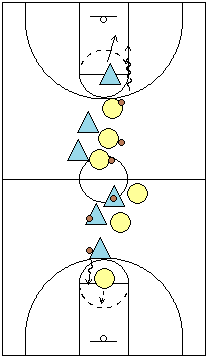
Rotation (see arrows in the diagram)
After a pair has finished their duel, they get in line on the other end of the floor, but switch offense and defense for the next possession.
Low Post Fronting Drill
When the ball is on the wing, we 1/2 or 3/4 front the low post from the baseline side (and double-team with our opposite wing player). Fronting from the baseline side stops the baseline drop-step move. The defender straddles the post player with one foot behind and one foot in front with one arm wrapped around the front of the post player.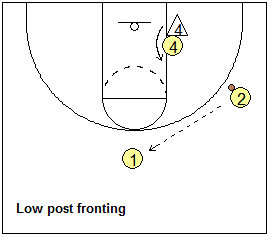
When the ball is at the point, we then step below and around, and get both feet above the offensive post with an arm bar on him/her and a hand in the passing lane. We step under (rather than in front of the offensive player) because we never give up inside position this way. If you step in front, it is possible for the offensive player to seal you and get inside position for a quick inside pass.
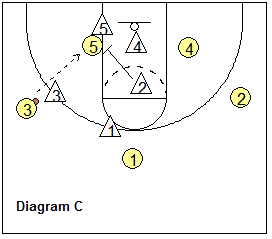
See the diagram. Pass the ball back and forth from the wing to the point. The post defender must quickly re-position with each pass. You can use both low blocks to teach defense on both sides of the court. This is a very simple but important drill in teaching correct fronting and defensive footwork.2-on-2 Post Up Drill - front from baseline side, helpside in the lane
Pass into the Low Post, Double-Team
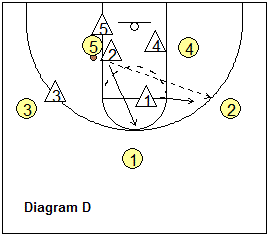
Sometimes the pass will get into the low post. We double-team this with our post defender on the baseline side (see above drill), and our opposite wing defender (who is already in the paint in helpside) from the lane side. This allows us to keep our opposite post defender on their other "big man".This drill stresses helpside positioning of the wing defenders and double-teaming the low post, and correct 1/2 - 3/4 front positioning by our low post defender. Start with the ball on the wing, allow the pass into the post and then set the double-team. The ball is skipped passed to the opposite wing, the wing defender sprints out to close-out, the opposite wing slides into helpside and the ball is passed into the opposite post.
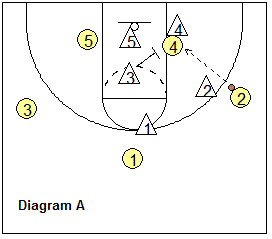
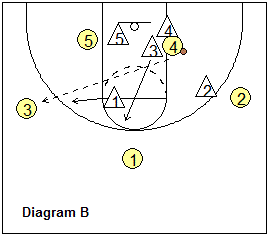
Pointer: On the skip pass from the post to the opposite wing, instead of the our helpside wing defender sprinting all the way out to his/her man, we often have our point defender X1 cover this pass (diagrams B, D) and the helpside wing defender jumps out to cover the point guard, who is closer and easier to get to. We call this a defensive "X-cut". You can drill this 5-on-5.
Defending Baseline Dribble Penetration
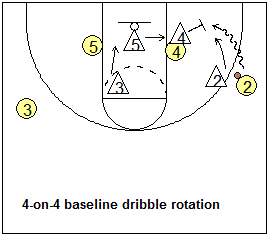
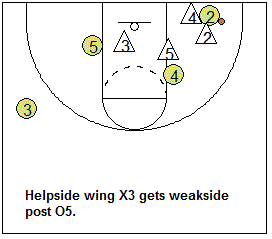
Baseline dribble-penetration is also double-teamed by the dribbler's defender and the ball-side post player. We try to force the wing to the baseline and get this trap. The opposite post must slide over quickly to pick up the post player O4 vacated by the trapping post defender.In our 4-on-4 drill, the weakside post player O5 will be defended by the weakside wing X3 (who is already in helpside), and it's vital that X3 be drilled in dropping down to deny a pass to O5.
You can use either a 3-on-3 or a 4-on-4 drill (by adding the opposite wing defender). You can run this drill in conjunction with the previous drill (Pass into the Low Post drill).
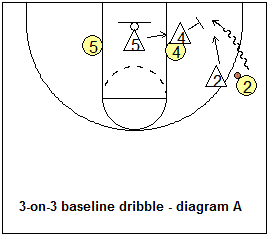
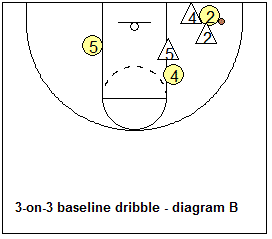
Notice that the ballside offensive post player O4 usually I-cuts up the lane on the baseline dribble looking for the pass from O2. X5 must go with O4 and deny this pass (diagrams B,D).
Post Defense vs Cutter
We want our post defenders to impede or slow-down cutters by getting in the cutter's way and using an "arm bar". We don't grab, elbow or do anything unsportsmanlike here, but simply try to use our strength and footwork to disrupt the cutter's timing or intended path of the cut. This drill also stresses correct helpside positioning when the ball is on the wing, and correct baseline fronting position.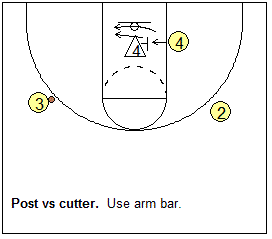
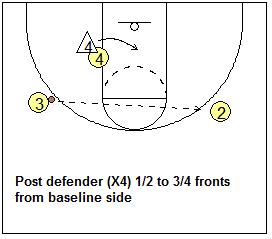
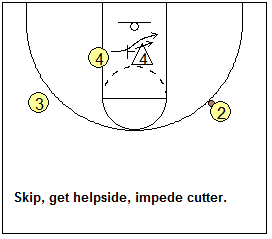
See the diagrams. Two offensive wing players, one offensive post and one defensive post are used. Start with the ball on the wing opposite the offensive post player. The post defender should now be in helpside with one foot on the helpside line (imaginary vertical line in the center of the paint).
The offensive post player cuts to the ball-side block. The defensive post tries to impede the cutter with an arm bar and then 1/2 - 3/4 fronts from the baseline side. The ball is passed to the opposite wing, the defender moves into helpside, and the cut and "bump" are repeated going back to the ball-side.
Defending Inside (Post) Screens
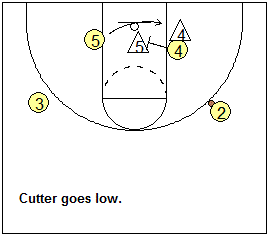
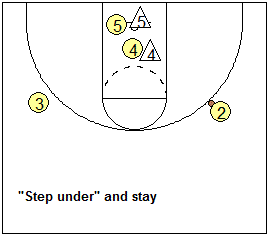
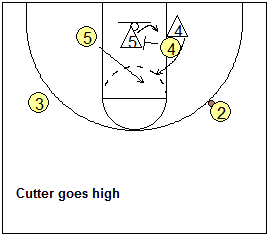
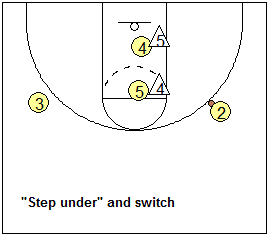
We "step under" all inside lateral post screens. This means that the screened post defender simply takes one giant step back toward the baseline, away from the screener.If the cutter cuts low, we "stay" with our man and do not switch. If the cutter goes high, we "step under and switch" the screen. The screener's man yells "screen, screen, screen!". The screened defender immediately takes a step back toward the baseline and steps under the screen. Now if the cutter goes low, he/she can just stay with his/her man, impede the cutter, and both defenders are in good position (see the two diagrams).
Now look at the diagrams below. Again the screened defender steps under toward the baseline. If the cutter goes high, the defense switches. By stepping under, the X5 defender is in good position to step around and front O4 from the baseline side, while X4 denies the cutter.
You can work this drill from both wings. At the start, one post defender should be 1/2 fronting from the baseline side while the other post defender should be in helpside.
Wing Deny Drill
This drill emphasizes denying the pass to the offensive wing player. We want to deny both the pass to the V-cut outside and also deny the pass to the back-cutting wing player.See the diagram. You need a lot of balls for this drill. Your assistant or a manager makes the rapid fire pass to the wing V-cutting. The defensive player denies this pass by tipping it away with his/her right hand (on the right side of the court). Using that hand allows the defender to still see and stay with his/her man. If the other hand is used instead (incorrectly) and the deflection is missed, the defender is easily beaten by the back-cut.
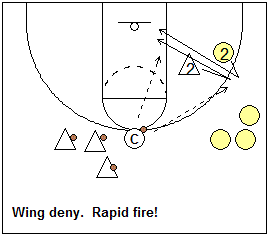
After deflecting the pass to the V-cut, the offensive wing makes the quick back-cut toward the hoop and the assistant tries to make that pass. The defender tries to deflect that pass as well. A good defender will be able to deflect both the V-cut pass and the back-cut pass. Each rotation features both passes. Players waiting in line can help supply balls to the passer (assistant).
Wing Helpside, Skip-Pass and Close-Out Drill
Our wing players must learn to play correct helpside defense (in the paint) when ball is two passes away on the opposite wing. This will help protect the paint from inside dribble-penetration and passing, and we can also use this helpside wing to double-team the low post (see above). On the other hand, the wing player must also be able to close-out quickly when the ball is skipped-passed back to his/her man.This 2-on-2 drill features a defender in helpside, sprinting out of helpside and closing out on his/her man on the wing, on the skip pass. We teach the defender to close-out on the top, or inside, shoulder of the offensive player, with the outside foot back, in order to force baseline. See the diagrams below. The ball is skipped passed back and forth while the defenders work on correct helpside positioning and closing-out.
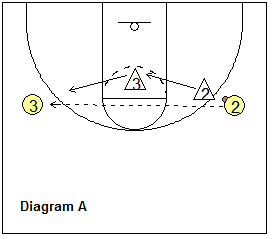
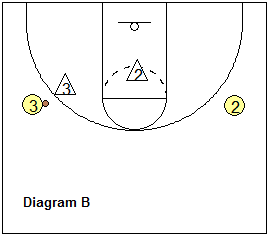
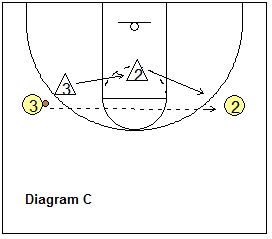
Defenders must be taught to rotate as soon as the pass is made, while the ball is in the air. Rotate offense to defense after several passes back and forth. For purposes of the drill, offensive players should catch the ball in triple-threat and hold it for a 2-3 second count before skipping it back.
See the complete article in the members section. Sign up now! The complete article also includes these drills:
Wing Skip-Pass, Deny Cutter Drill
Wing players must learn to play helpside defense and react to and deny cutters... (more in the members section)Wing Skip-Pass and Box-Out Back-Side Drill
This a helpside, close-out and box-out drill... (more in the members section)Pick and Roll Defense Drill
We "jump-switch" outside pick and roll screens, and also hand-off (weave) screens... (more in the members section)Defending Back-Screen Drill
We switch back-screens... (more in the members section)Defending Down-Screen Drill
We chase the offensive player around a downscreen and do not switch because... (more in the members section)Close Seam and Recover Drill
We like tight pressure on the ball. But this can make us vulnerable to dribble-penetration. We try to deny dribble-penetration by "closing the seam", getting the adjacent perimeter player to "hedge" (help and recover)... (more in the members section)Defense vs Dribble-Penetration from the Top
Dribble-penetration from the point is a problem since the helpside defense is not established when the ball is at the point. We try to stop this by... (more in the members section)Related pages:
- 1-on-1 Defensive Drills from Coach Joao Costa
- Defensive Shell Drills
- Defensive Close-Outs and Drills
- Taking The Charge - Tips and Drills
From Duke Basketball: Tactics, Techniques and Drills for Man Defense
"Contest and Interchange" Drill:
"Contest and Interchange" Drill:
