



Managing Long-Term Player Fatigue, by Thomas Emma
From the Coach’s Clipboard Basketball Playbook"Helping coaches coach better..."
Tom Emma was a graduate of Duke University, where he was a three-year basketball starter and captain his senior year, and was later drafted by the Chicago Bulls in 1983. He held a Masters degree from Columbia University, specialized in sports conditioning, was the owner of Power Performance, Inc. and published several books. Tom authored several other articles on this website. Sadly (after the original posting of this article), Tom died on June 8, 2011... Coach Gels.
One of the most important (and difficult) aspects of a basketball coach's job is managing long-term player fatigue. This type of fatigue, unlike being winded during a game or practice session, describes the cumulative effects of a basketball season on a player's body. It is a subtle performance inhibitor, hard to recognize by even the most discerning of eyes, and is inevitably debilitating to individual and team success.
Ascertaining how a player feels physically at a given point in time over the course of a long, grueling basketball season is far from an exact science. In fact, it qualifies much more as an art, requiring coaches to develop an intuitive feel for players' physical capabilities and recovery needs.
And to make matters more complicated, every player is distinctly unique when it comes to recovery requirements; some recover quickly from even the most intense physical demands, while others need substantial rest periods to be ready to go at 100% capacity after hard exertion. Most are somewhere in-between this broad continuum.
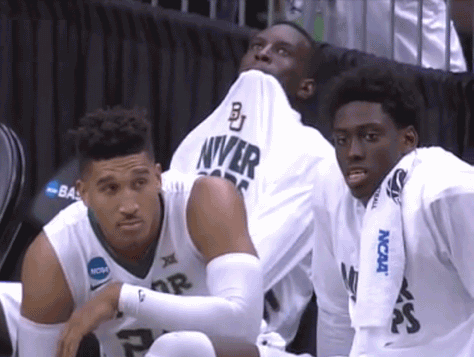
Bench time for the player may help avoid long-term fatigue down the road, but will it help win the game today? This scenario illustrates just how complicated dealing with long-term player fatigue is. Do everything to win the game? Or rest the player for future battles? Tough choice to say the least.
Despite the challenges, long-term player fatigue can be dealt with effectively and often avoided all together, by employing a series of proven strategies. Below, after the major warning signs of long-term player fatigue are listed, these strategies are explained in detail.
Warning Signs of Long-Term Player Fatigue
- Consistently short on shots.
- Late game performance meltdowns
- Substantially lower free throw percentage, especially late in games
- Missed defensive assignments due to lack of concentration
- Laboring up and down court
- Regularly asking out of games
- Lack of enthusiasm for practices and conditioning workouts
- Preponderance of minor injuries
- Complaints of excess soreness in muscles and joints
- Noticeable loss in weight room strength (keep in mind, it’s normal to lose some strength during the basketball season)
- Insomnia
Early Recognition
The first and most crucial step in preventing long-term fatigue among players is early recognition. Once long-term fatigue sets in, it is extremely difficult, if not impossible, to shake without extensive rest, which as we all know, is a luxury not afforded to players during the busy basketball season.As such, it is imperative for coaches to be hyper-vigilant in watching for signs of long-term fatigue in players (see signs above). As they say, an ounce of prevention is worth a pound of cure. Recognizing the symptoms of long-term fatigue early will allow coaches to respond before the problem becomes chronic.
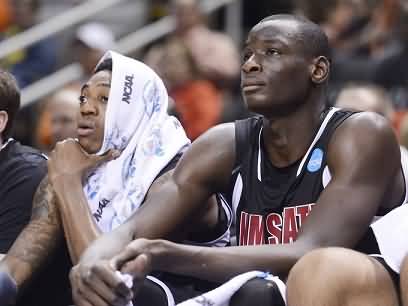
Regulating Minutes: A Key to Avoiding Body Breakdown
If one thing is for sure in the uncertain world of competitive basketball it is that players don't want to be taken out of a game (this goes for practice scrimmages as well, especially if positions and playing time are at stake). Regardless of circumstances, be it foul trouble, fatigue, poor play, or match-up problems, dedicated basketball players want to be on the floor and in the action at all times.Notwithstanding a player's desire to play (a good trait, by the way), coaches must aspire to limit minutes conscientiously, especially those of starters, throughout the season. This strategy will pay great dividends late in the campaign and during the post season in terms of keeping your athletes fresh and strong.
Some ways to limit court time for high minute players include:
- Play your bench often early in the season. Playing substitutes substantial minutes early in the campaign when games tend to be less important serves many positive purposes, not the least of which is saving starters from the deleterious effects of long-term fatigue. Remember, early rest equals post-season success.
- When games are decided, give your starters a break. It is amazing to me how many coaches on a variety of levels persist on keeping their top players in games long after outcomes have been decided. These useless minutes can greatly contribute toward long-term fatigue as the season moves forward-not to mention leaving players susceptible to injury due to sloppy play (a common occurrence during garbage time).
As such, unless extra minutes are serving some tangible purpose (improving team continuity, helping a player breakout of a prolonged shooting slump, etc.), resting your starters when a game is out of reach one way or the other is highly suggested. - Don't play athletes extra minutes to garner individual statistics. Unless a player is reaching some type of milestone that can't be achieved in a subsequent game, playing players so they can pad their statistics is a mistake. Adding minutes in this manner not only increases the chances of individual body breakdown, but exhibits poor sportsmanship as well. Winning is the only statistic that counts in the end.
- Encourage players to communicate when they're dragging during a game. Players should be encouraged to let the coach know when they're gassed out on the court. Originally brought to the game by legendary North Carolina coach, Dean Smith, having players signal to be taken out of a game is a great way to save athletes from unnecessary (and unproductive) minutes.
Practice Makes Perfect, But Only in the Right Measure
Juggling team chemistry issues, skill development, physical conditioning, and game preparation during regular season practice sessions are worthy challenges for any basketball coach. These variables (among others) are constantly changing-moving targets, if you will-with one then the other taking precedence at any given point in time. And to make matters worse (and more complicated) time and player energy/concentration are finite, often making the best laid practice plans moot once the whistle blows.To help coaches organize the above variables (and others), I suggest incorporating a numbering system from one to five with one being the least necessary at the time and five being the most needed. Simply put a number next to each aspect after practice ends and use that figure to plan the time breakdown for the following days session. (It is always better to make these number delegations immediately after practice when things are fresh in mind.) This will ensure that players are not being overworked in one particular area, thus helping to avoid long-term fatigue.
Encourage Player to Coach Communication
Basketball coaches are forever initiating communication with their players. However, it is far less common for players to return the favor and initiate conversation with their coaches. (In fact, most players do all they can to avoid dialog with coaches!)It is absolutely imperative that the lines of communication from player to coach are open at all times concerning player physical status. Some symptoms of long-term fatigue such as muscle and joint soreness, insomnia, and loss of enthusiasm for practice and conditioning workouts, coaches just won't be privy to unless the player speaks up. As such, coaches must create an atmosphere that encourages just that. Let players know from the first day of practice that their physical concerns are important and worth communicating about openly and honestly.
It is suggested that coaches set up bi-weekly brief (5 minutes or so) meetings with all high-minute players to discuss individual physical condition. Obviously, if signs of fatigue are readily apparent in a certain player, a discussion with that player should be undertaken immediately.
Additionally, coaches should consider assigning someone on their staff (assistant coach, team trainer, or even a team manager) to watch closely for any signs of long-term fatigue amongst players. This will give a busy head coach one less responsibility and make sure nothing on the long-term fatigue front is missed.
Consider Incorporating Recovery Practices
A fantastic way to minimize the chances of long-term player fatigue from infiltrating your team is to periodically incorporate recovery practices into the schedule. These type sessions can be extremely advantageous from both a mental and physical standpoint and are used liberally by many of the games top coaches.The practices themselves can take many forms. They can be fitness oriented where stretching, light aerobic exercise, and strength training are included; or they can be totally recreational in nature (an enterprising young coach I once played for arranged games of volleyball and wiffle ball on the basketball floor in lieu of practice); or, if coaches want to get some basketball related work in, include some fun-oriented shooting games pitting backcourt players vs. frontcourt player, reserves vs. starters, or even coaches vs. players.
Of course, what coaches do during recovery practices is only half the equation. The other important half is when they're planed. Coaches must develop an intuitive feel for the physical status of the team as a whole, and when they feel that the squad is collectively dragging, guess what? It's time for a recovery practice.
And finally, don't hesitate to use the element of surprise. There's nothing quite as musical to the ears of a player as hearing no tape today! This means, of course, that ankles won't be taped and practice therefore will be of the non-contact variety.
Keep Punishment Practices to a Minimum
Anyone who has been involved in basketball for any length of time is familiar (perhaps too familiar!) with punishment practices. The scenario usually looks something like this: the team plays poorly, possibly losing to an inferior squad or underachieving over a number of games. The next days practice looms and the coach is hot! Said coach then proceeds to run his charges into the ground with endless wind sprints, no whistle scrimmages, and intense full-court drills.While this approach is understandable, and often useful from a psychological standpoint (players certainly will be motivated not to go through this type of torture again!), punishment practices must be incorporated selectively and carefully, especially during the heart of the season when players are susceptible to physical breakdown.
Energy and physical strength are finite resources over the course of a long, grueling basketball campaign and they must be maintained as conscientiously as possible. Punishment practices may be just what the doctor ordered when it comes to lighting an emotional fire under your team; however, they can also be the tipping point toward sending players' physical equilibrium into a tailspin.
Do Not Neglect Treatment
It's no secret that high-level competitive athletes tend to think of themselves as indestructible. Basketball players, of course, are no exception. While this penchant can help engender confidence on the playing floor, it can also give players the false sense that they don't need to address minor injuries and their attendant aches and pains with proper treatment.Not paying attention to any type of physical discomfort is a mistake, one that can at the very least lead to some unnecessary wear and tear, and at the most allow a full blown (and preventable) injury to materialize.
Implement a Year-Round Strength Training Program
All basketball players should be involved in a year-round strength-training program that begins in the early off-season and continues right through the competitive campaign. This will accrue numerous benefits, not the least of which is helping players to avoid the fatigued state during the basketball season.There are numerous ways to implement a basketball strength program. It is suggested that coaches, especially those who are not well-versed in strength training or have limited time, seek out a sports strength and conditioning specialist, preferably one who has experience working with cagers, and have him or her develop a suitable team strength program.
If this type of individual is not available, there are many books and videos on the market today that cover the subject of basketball strength training comprehensively. The best of these products can in essence serve as your team's strength coach.
Off-Season Running a Must
There was a time not all that long ago when basketball players, even those at the highest levels of competition, did very little in the way of off-season physical conditioning. Most played themselves into shape during pre-season practice. This approach (to say the least) has changed in the current competitive and fast-paced basketball world.Players are now required to report for pre-season workouts highly conditioned and ready to go at full speed from day one. Not doing so is a sure ticket to riding the pine when game play begins-if they're lucky enough to be on the team, that is!
To ensure that players are in shape to play the demanding game of basketball when fall practice begins, an organized running program, one which encompasses the entire off-season, should be implemented and combined with other training disciplines (skill development, athleticism enhancement, strength and flexibility training, etc.).
This not only will make for crisp pre-season practices, but also help players avoid long-term fatigue as the campaign moves toward its later stages. Developing a strong base of conditioning will also go a long way toward preventing injuries.
At the end of the season, coaches should present each player a written running program, which progressively builds cardiovascular fitness over the summer months. As with the previously mentioned strength training program, you should feel free to consult a sports conditioning coach to help develop the running program or research the numerous informative basketball conditioning books and videos available today.

Off-Season Overtraining: Surprisingly Common in the Basketball World Today
While the advent of state-of-the-art athletic performance training techniques such as plyometrics (a form of jump training), high-intensity strength training, and specialized speed enhancing drills has been a net positive, giving individuals the tools they need to reach their full athletic potential, it has also contributed to numerous athletes in a variety of sports (including basketball) to overtrain, especially in the off-season when very little in the way of expert supervision is available for most. In their haste to get it all in, dedicated competitors simply do too much, leaving their bodies on the verge of breakdown before seasons even start.Entering a basketball season in an overtrained state is a sure recipe for long-term player fatigue down the line. As such, coaches must emphasize the importance of restraint in off-season physical training. Too much off-season work can be just as damaging to subsequent on-court performance as can too little training. Encouraging players to train hard and consistently during the summer months is fine. Just remind them to train smart as well.
Related page:
