From the Coach's Clipboard Basketball Playbook
A player drives into the lane and draws a second defender. A teammate cuts behind a defender who is watching the ball. Two offensive players attack one defender on a fast break. Each situation presents a decision: shoot, pass, keep dribbling, cut, or move to create space.
We practice shooting, passing, dribbling, and footwork. Players also need practice recognizing when, where, and why to use those skills. A player may execute a move well in a drill but struggle to recognize when to use it against a defender.
In our article on Teaching Basketball IQ: Reads That Matter, we discuss helping players recognize situations and respond with purposeful actions. This article takes that idea onto the practice court, using small-sided games to give players repeated opportunities to read defenders, make decisions, and learn from the results.
Most coaches already use some of these games. You may have run 2-on-1 fast-break drills, played 3-on-3 in the half court, or used 1-on-1 to teach attacking and defending. The next step is to organize these familiar activities around a specific question: What decision do we want players to learn?
For example, a 2-on-1 game can teach the ball-handler to recognize whether the defender is stopping the ball or staying with the receiver. A 3-on-3 game can teach players when to cut, when to stay spaced, and how to respond when a teammate penetrates.
With a clear teaching purpose, these games become a practical way to connect individual skills with team basketball.
What Are Small-Sided Games?
Small-sided games are basketball games played with fewer players than the usual 5-on-5. They include familiar formats such as 1-on-1, 2-on-2, and 3-on-3, along with games in which one side has a temporary numerical advantage, such as 2-on-1 or 3-on-2.They can be played in the half court, full court, or a selected area of the floor. Coaches can adjust the starting positions, space, scoring, and rules to bring a particular decision into play.
The essential feature is live opposition with a choice to make. Players must observe what is happening and choose a response. The defender has enough freedom to change the situation, so the offensive player cannot simply repeat a predetermined move.
Consider the difference between these two activities:
- Passing rehearsal: Two players run down the court, exchange passes, and finish with a lay-up.
- Decision-making game: Those same two players attack one live defender. The ball-handler must decide whether to pass or finish, while the teammate adjusts position to remain available.
Why Use Fewer Players?
In 5-on-5, a player must sort through the movements of nine other players. Some players may go several possessions without handling the ball or being directly involved in the action you want to teach.Smaller games simplify the situation. With fewer players, it is easier to see a defender's position, recognize an open lane, or understand how a teammate's movement creates an opportunity. Players also have more opportunities to handle the ball and participate in the decisions.
For the coach, the smaller setting makes it easier to identify the source of a problem. Did the player miss the open teammate? Was the pass late? Was the decision appropriate, but the pass poorly executed? Those situations call for different teaching.
Give Each Game a Teaching Purpose
Start by choosing a decision, then select a game that presents it repeatedly.For example, to teach passing out of penetration, begin with a ball-handler on the wing, a teammate in the corner, and two defenders. Allow the defenders to respond freely. If the corner defender helps on the drive, the pass may be available. If that defender stays home, the driver may have an opportunity to finish.
The offensive players must read the defense. A rule requiring a pass on every drive would remove the very decision you are trying to teach.
Use only a few rules, and make sure they support the lesson. Adjust the space or starting advantage if players cannot yet recognize the options. As they improve, add a recovering defender, another teammate, or a transition into continued play.
Coach the Read as Well as the Result
A missed shot does not necessarily mean the player made a poor decision. An open lay-up can be missed after an excellent read. A difficult shot can go in despite an open teammate being overlooked.Help players understand both the choice and its execution. Brief questions can direct their attention:
- "What did the defender do?"
- "When did your teammate become open?"
- "Where could you move to give the driver a passing option?"
The following twelve small-sided games complement skill instruction and 5-on-5 practice. They give coaches a manageable setting in which to teach a read, let players explore their options, and then carry that learning into the full game.
Printing: Open the games you want to print. Leave the others closed to print just their headings and purpose. To print the complete collection, click "Open all games" first.
(#1) 2-on-1: Read the Defender
Purpose (click to view game)
Teach players to recognize when to attack the basket and when to pass. The player without the ball learns to maintain spacing and provide a clear passing option. The defender practices delaying the attack and making the offense work for its shot.
Setup
Use one basket. Two offensive players start near half court, one in each outside lane. One has the ball. A defender starts near the free-throw line, facing the offense.The offensive players attack together against the live defender. Adjust the starting distance to suit your players. Younger players can begin closer to the basket.
Rules
- Play live until a basket, defensive rebound, turnover, or ball out of bounds.
- The ball-handler may shoot or pass. Do not require a pass before a shot.
- Keep the possession moving toward a scoring opportunity. If players repeatedly stop and reset, add a reasonable time limit.
- Rotate players so everyone practices handling the ball, supporting the attack, and defending.
Reads and Decisions
For the ball-handler:Attack the basket under control and watch the defender’s position and movement.
- If the defender stays with your teammate: Continue toward the basket and finish.
- If the defender commits to stopping you: Pass to your teammate before the defender crowds you and closes the passing angle.
- If the defender stays between both players: Keep advancing under control. Make the defender respond to a credible scoring threat, then choose the finish or pass.
For the player without the ball:
Stay wide enough that one defender cannot easily guard both players, but close enough to receive a manageable pass. Advance toward a useful finishing position as your teammate attacks. Adjust to keep a clear passing lane, and be ready to catch and finish without an unnecessary dribble.
Coaching Points
Attack! Think lay-up first, or get fouled. If the defender stops you, pass. A ball-handler who looks only to pass allows the defender to stay with the receiver.Time the pass. Passing too early lets the defender recover to the receiver. Waiting too long can close the passing lane or lead to an offensive foul. Deliver the pass as the defender commits to stopping the drive.
Maintain useful spacing. If the offensive players converge beneath the basket, one defender may contest either shot. The supporting player should preserve a clear passing angle and room to finish.
Use the pass the opening allows. A bounce pass may work beneath an extended arm; a direct pass may be quicker when the lane is clear. Avoid requiring the same type of pass on every repetition.
Evaluate the decision separately from the finish. A good read can still result in a missed lay-up. Identify what needs improvement: recognition, timing, passing, catching, or finishing.
Between repetitions, ask briefly: “What did the defender take away?” or “When was the pass available?”
Progressions
Change the starting positions. Begin with the ball on either side. Vary the defender’s starting depth so players must recognize a different picture.Add a recovering defender. A second defender starts several steps behind the offense and joins the play on the coach’s signal. The offense must use its temporary advantage before the defender recovers. Adjust the head start to keep both options realistic.
Continue into 2-on-2. If the recovering defender gets back before a shot, allow play to continue. Players must recognize that the initial advantage has disappeared and find the next opportunity.
Connection to the Full Game
This same read occurs when a driver draws a help defender or when two teammates attack the last defender in transition. The situation becomes more crowded in 5-on-5, but the central decision remains: Can I finish, or has the defender created a better opportunity for my teammate?(#2) 3-on-2: Find the Open Player
Purpose (click to view game)
Teach players to attack with a numerical advantage, recognize which defender stops the ball, and find the open teammate. Players without the ball learn to maintain spacing and prepare for the next pass.
Setup
Use one basket. Three offensive players start near half court, with the ball in the middle and a teammate in each outside lane. Two defenders start in tandem: one near the free-throw line and the other closer to the basket. Both defenders are free to move and react once play begins.Rules
- Play live until a basket, defensive rebound, turnover, or ball out of bounds.
- The offense may shoot or pass at any time. Do not require a set number of passes.
- Offensive players should advance quickly while maintaining control and spacing.
- Rotate players through the ball-handling, supporting, and defensive positions.
Reads and Decisions
For the ball-handler:Advance toward the top defender under control. Against tandem defenders, you will usually pull up around the top of the key or free-throw line area and pass to an open teammate in an outside lane. Read the lower defender's position to determine which teammate is available. Stay balanced and avoid driving into the top defender or leaving your feet without a passing option.
For the receiver:
Be ready to catch and score. If the second defender rotates to stop you, look for the remaining open teammate. If you already have an open lay-up, take it. An extra pass is useful only when it creates a better opportunity.
For the player away from the ball:
Stay involved as the ball moves. Adjust your position to provide a clear passing lane and a useful scoring option. Avoid drifting behind a defender or crowding the teammate attacking the basket.


Coaching Points
Engage the top defender. Advance far enough to make the top defender guard you, then pass before becoming crowded. Pulling up around the top of the key or free-throw line area gives you a useful position from which to see both teammates and read the lower defender. If the lower defender takes away one receiver, look to the other.Attack to draw a defender. Passing around the perimeter without threatening the basket allows two defenders to keep shifting between three players, and allows the trailing defenders to catch up. Make a defender stop the ball, then use the opening that creates.
Read the next defender. The first pass does not always produce an open shot. The receiver must recognize whether the remaining defender is protecting the basket, closing out, or taking away the next pass.
Keep the advantage moving. Catch ready to shoot, drive, or pass. An unnecessary pause or extra dribble gives defenders time to recover.
Maintain useful spacing. Stay far enough apart to make the defenders cover ground, but close enough to complete accurate passes. As players approach the basket, avoid having all three converge in the lane.
Finish strong - score or draw the foul. When you have an available lay-up, attack under control and finish through contact. Avoid an unnecessary pass just to escape contact. Do not turn the game into a passing exhibition, as this allows the trailing defenders to catch up and you lose your advantage.
Between repetitions, ask briefly: “Who stopped the ball?” or “What did the second defender do?”
Progressions
Vary the starting positions. Start the ball in an outside lane, or let the defenders begin side by side. Players must recognize the situation instead of memorizing a passing sequence.Add a recovering defender. A third defender starts behind the offense and joins on the coach's signal. Adjust the head start so the offense has a brief but realistic opportunity to use its advantage.
Continue into 3-on-3. If the recovering defender gets back before a shot, continue the possession. The offense must recognize when the numerical advantage has disappeared and use spacing, movement, and teamwork to create another opening.
Connection to the Full Game
A 3-on-2 situation often occurs during a fast break, but the same decisions appear when penetration draws help in the half court. Players learn to attack an opening, recognize the defensive rotation, and move the ball to the teammate that rotation leaves available.(#3) 1-on-1: Read the Closeout
Purpose (click to view game)
Teach players to read a closing defender and decide whether to shoot or drive. Players learn to prepare before the catch and attack an opening before the defender becomes established.
Setup
Use one basket. An offensive player starts on the wing, within comfortable shooting range. A defender starts in the lane with the ball. The defender passes to the offensive player and closes out. Play is live on the pass.Vary the defender's starting distance so the offensive player sees both short, controlled closeouts and longer, faster closeouts. The defender should make a genuine effort to prevent a score.
Rules
- Play live until a basket, defensive rebound, turnover, foul, or ball out of bounds.
- The offensive player may shoot or drive. Do not require a shot fake or a dribble before attacking.
- Initially, allow enough dribbles to complete the attack. As players improve, try a three-dribble limit to encourage direct attacks.
- Switch roles and repeat from both wings.
Reads and Decisions
Before the catch:Locate the basket and read the approaching defender. Have your hands ready, your knees bent, and your feet prepared to move into a balanced shot or drive (see "triple threat position").
If the defender stays back:
Take the open shot if you are within your shooting range and balanced. Avoid an unnecessary dribble that gives the defender time to close the gap.
If the defender closes hard:
Look to attack the space the defender leaves available. Read the defender's speed, balance, and angle. A defender rushing forward or approaching from one side may have difficulty changing direction to stop your drive.
If the defender arrives under control:
Do not force a drive into the defender's chest. Use a purposeful jab, shot fake, or change of direction to create a reaction, then attack the opening. The move should respond to the defender rather than begin a memorized sequence (see "jab step").
Coaching Points
Be ready before the ball arrives. Catching upright, lowering the ball, and then looking at the defender wastes the opportunity. Prepare early so you can act while the defender is still moving.Take the open shot. Players sometimes decide to drive before receiving the pass. If the defender gives you a good shot within your range, recognize it and take it.
Attack the available space. Look to get your shoulder past the defender's hip with a direct first step. Avoid drifting sideways without gaining an advantage. Protect the ball and keep your movements legal.
Use fakes with a purpose. A shot fake can draw a defender upward or forward, but it is unnecessary when a driving lane is already open. Read the response rather than automatically following every fake with a drive.
Finish strong. Once you gain an advantage, get to a balanced finish. Do not slow down simply because the defender is recovering beside you. Stay under control and be prepared to finish through contact.
Between repetitions, ask briefly: “What did the closeout give you?” or “Was the defender balanced when you attacked?”
Progressions
Change the location. Repeat from the opposite wing, the top, and the corners. Discuss how the sideline and baseline affect the available driving space.Use a separate passer. Have a coach or teammate deliver the pass while the defender starts in a help position. The defender closes out as the pass travels, giving the offense a more game-like catch.
Add a help defender and a teammate. Place another offensive player in the opposite corner and a second defender in a help position. Play live 2-on-2. The ball-handler reads the closeout first, then decides whether to finish or pass if help stops the drive. The teammate adjusts to maintain a passing lane.
Connection to the Full Game
Closeout decisions occur after ball reversals, kick-out passes, and passes out of a double-team. Players who prepare before the catch can use the defender's movement to shoot or penetrate before the defense gets set.(#4) 2-on-2: Pass, Cut, and Read
Purpose (click to view game)
Teach players to read their defender after passing, recognize cutting opportunities, and work with a teammate to create a scoring chance. Defenders practice guarding the ball and a cutter without losing sight of either.
Setup
Use one basket. One offensive player starts at the top with the ball, and a teammate starts on a wing. Each has a defender. Check the ball to begin live play.The player at the top looks to pass to the wing, then reads the defender and cuts toward the basket. If the wing is denied, the receiver may cut backdoor. Allow the defenders to play freely so the offense must recognize what is available.
Rules
- Play live until a basket, defensive rebound, turnover, foul, or ball out of bounds.
- After passing, the passer must cut toward the basket, then clear to an open perimeter spot if the return pass is unavailable.
- The ball-handler may shoot, drive, or pass. Do not require a return pass to the cutter.
- Begin without on-ball or off-ball screens so players focus on passing, cutting, and spacing.
- Repeat from both sides and switch offensive and defensive roles.
Reads and Decisions
For the passer:After passing, read your defender. If the defender turns to watch the ball or leaves a direct path to the basket, cut immediately through that opening. If the defender jumps toward the ball and takes away the direct cut, change direction and cut behind the defender. Use a change of pace to get open rather than wrestling your way through a guarded route.
For the receiver:
Catch ready to score, and see the cutter. Make the return pass when there is a clear passing lane and the cutter has an advantage. If the defender stays between the cutter and the basket, keep the ball rather than forcing the pass. Read your own defender as well; an open shot or drive may be the better opportunity.
If the initial cut is covered:
The cutter continues through and clears to an open perimeter spot. Keep enough separation to give the ball-handler room to attack. If no scoring opportunity develops, pass and cut again from the new positions.
If the wing entry is denied:
The receiver can move toward the ball, then change direction and cut backdoor when the defender overplays. The passer must recognize the cut early and deliver the ball through an open passing lane. If the pass is unavailable, the cutter clears and the players restore their spacing.
Coaching Points
Pass, then become a threat. Avoid standing and watching after the pass. A well-timed cut can produce a lay-up or occupy a defender while your teammate attacks.Cut in response to the defender. The rule requires a cut, but its route and timing depend on the defense. Do not turn the game into a rehearsed give-and-go with a defender simply following along.
Cut with a purpose. Cut to get open and score, not simply because you are supposed to cut. Use a change of pace, then cut hard and quick through the opening. See the ball and have your hands ready to receive. The passer should lead the cutter toward the finish with a pass suited to the opening.
Do not force the return pass. A covered cutter may still create space for a drive. Recognize what the cut opens rather than judging every cut by whether it receives the ball.
Clear the lane. If the pass does not come, continue through. Stopping beneath the basket brings another defender into the ball-handler's driving space.
Coordinate the cut and drive. Avoid driving into the same space your teammate is cutting through. Read the cutter's path and attack the available opening, often as the cutter clears.
Between repetitions, ask briefly: “What did your defender do after the pass?” or “If the cutter was covered, what else was open?”
Progressions
Vary the starting positions. Begin with the ball on the wing and the teammate at the top, or use a wing and corner. Help players recognize how their positions affect cutting routes and passing angles.Remove the required cut. Let the passer decide whether to cut immediately or maintain spacing before moving. Ask players to explain what they saw. Look for purposeful movement rather than cutting automatically or standing without being a threat.
Add a third offensive player and defender. Play 3-on-3 without screens. After a pass and cut, the third player reads the action and fills an open perimeter spot while preserving driving space. The ball-handler now has another passing option.
Connection to the Full Game
Passing and cutting are basic parts of team offense. This game teaches players to recognize an available cut, deliver a timely pass, and continue playing when the first option is covered. It also reinforces that a cut can help a teammate score even when the cutter never receives the ball.(#5) 3-on-3: Read the Drive
Purpose (click to view game)
Teach the ball-handler to read help defense and decide whether to finish or pass. Teammates learn to adjust their positions during penetration, preserve driving space, and prepare to use the next advantage.
Setup
Use one basket. Three offensive players start spaced around the perimeter: one at the top and one on each wing. Each has a defender. Begin with the ball on either wing.The on-ball defender starts beside and half a step behind the ball-handler, on the side of the intended drive. This gives the ball-handler a small head start toward the lane. On the coach's signal, play is live. The defender tries to recover while the other defenders decide whether to help or stay with their players.
Adjust the starting advantage so the driver can threaten the lane without being guaranteed an uncontested lay-up. Alternate sides and rotate the initial driver.
Rules
- Play live until a basket, defensive rebound, turnover, foul, or ball out of bounds.
- Begin with a drive, then allow free play. Do not require a kick-out pass.
- Players without the ball may relocate or cut, but should preserve room for the drive.
- Initially, play without screens so players focus on penetration, help defense, and supporting movement.
- If the defense stops the initial advantage, continue playing rather than restarting immediately.
Reads and Decisions
For the driver:Attack the opening under control and read the help defense. If no defender stops you, finish. If a help defender commits to stopping the drive, look for the teammate that defender leaves available. Deliver the pass before becoming trapped beneath the basket or crowded by defenders.
A defender may show help and recover without fully committing. Avoid deciding to pass before seeing the response. Keep the ball protected and stay balanced enough to finish, stop, or pass as the situation requires.
For the players without the ball:
Move with the drive to maintain a clear passing lane. Read the driver, your defender, and the available space. A few purposeful steps may be enough to move out of a defender's shadow and give the driver a target.
On a drive toward the middle, the opposite wing may slide toward the corner to provide a passing angle. On a baseline drive, an opposite-side player may move toward the opposite corner, while another teammate stays available behind the drive as an outlet. Adjust these movements to your team's spacing rules and the defenders' positions.
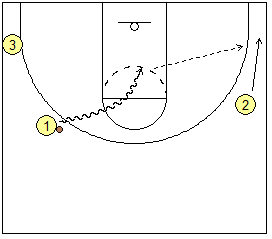

Do not automatically cut into the lane as your teammate drives. A cut behind a helping defender can be effective when there is a clear opening, but a cut through the driver's path can bring another defender to the ball.
For the receiver:
Prepare before the pass arrives. If you receive an open shot within your range, take it. If a defender closes hard, attack the opening. If another teammate has a better opportunity, move the ball promptly. Read the new situation rather than automatically shooting or driving after every kick-out.
Coaching Points
Drive to create a scoring opportunity. The initial advantage should make the defense respond. Do not drive into traffic merely to complete the required penetration, and do not pass up an available finish because you expect to kick the ball out.Make yourself available. Standing still behind a help defender leaves the driver without a clear target. Move enough to open the passing lane, keep your hands ready, and remain within useful passing distance.
Preserve the driving lane. Supporting movement should give the driver options and space. Avoid following the ball into the lane or having both teammates relocate to the same spot.
Pass before the opening closes. Recognize when help commits and deliver the ball while the passing lane is available. Waiting until you are airborne or surrounded makes the pass more difficult.
Use the next advantage. A kick-out may produce a shot, a drive against a closeout, or an additional pass. Be ready to act while the defense is recovering. Avoid an unnecessary pause or dribble that lets defenders get set.
Finish strong when the opportunity is there. If help stays home or arrives too late, attack the basket to score. Do not make an unnecessary pass simply to avoid contact.
Between repetitions, ask briefly: “Whose defender helped?” “Where could you move to give the driver a target?” or “What did the closeout give you?”
Progressions
Change the direction of the drive. Begin with middle penetration, then practice baseline penetration. Let players see how the direction changes the useful passing angles and supporting positions.Change the starting alignment. Use a top, wing, and opposite corner, or another alignment from your offense. Apply your team's spacing rules while keeping the same emphasis on reading help and becoming available.
Remove the initial advantage. Start with the on-ball defender in a normal guarding position. The offense must create penetration through a closeout attack, pass and cut, or individual move. Continue playing through the drive and the defensive response.
Connection to the Full Game
Penetration affects everyone on the floor. The driver must read the help, and teammates must recognize how that help changes their opportunities. This game connects the finish-or-pass decision with purposeful off-ball movement and the shoot, drive, or pass decision on the next catch.(#6) 2-on-2: Read the Ball Screen
Purpose (click to view game)
Teach the ball-handler and screener to recognize how defenders guard a ball screen and respond together. The goal is to create and use an advantage rather than follow a predetermined dribble-and-pass sequence.
Setup
Use one basket. A ball-handler starts on a wing, and a teammate starts near the high post. Each has a defender. The teammate moves into position to set a ball screen that allows the ball-handler to attack toward the middle.Begin by having the defense alternate between going under the screen and trailing over it, with the screener's defender helping contain the drive. Once players understand those reads, introduce switching. Tell the defenders which coverage to use without telling the offense.
Match the defensive choices to your players' experience. Younger players can begin with just two responses to recognize.
Rules
- Begin with a ball screen, then play live until a basket, defensive rebound, turnover, foul, or ball out of bounds.
- The screener must establish a legal screening position and remain stationary during contact. Do not lean, push, or move into the defender.
- The ball-handler may shoot, drive, or pass. Do not require a pass to the screener.
- The screener moves into available space after the screen rather than standing and watching.
- Repeat from both sides and rotate players through both offensive roles.
Reads and Decisions
For the ball-handler:Let the screener establish position before using the screen. Bring your defender toward it, then pass close enough to the screener that the defender cannot easily squeeze through. Keep your eyes up to read both defenders.
If your defender goes under:
Look for an open shot within your range. If the shot is unavailable or outside your range, maintain control and continue the possession. The screener may reset at a different angle to create another opportunity.
If your defender trails over the screen:
Attack the opening and read the screener's defender. If that defender stays with the screener, continue toward your own scoring opportunity. If the defender steps up to stop you, look for the screener rolling toward the basket. Do not force the pass if the recovering defender takes away the passing lane.
If the defenders switch:
Recognize the new matchups. The screener may have an opportunity to seal the smaller defender near the basket, or the ball-handler may have room to attack the new defender. Use an advantage promptly if one exists; a switch does not automatically create a mismatch worth forcing.
For the screener:
After the ball-handler clears the screen, turn to see the ball and move into an open passing lane. Roll toward the basket when that space is available. Against a switch, look to establish inside position on the new defender. Keep your hands ready and avoid rolling directly behind a defender where the ball-handler cannot reach you with a pass.
Coaching Points
Set up the screen. The ball-handler and screener must coordinate their timing and angle. Leaving before the screen is established makes it easier for the defense to get through and may lead to a moving screen.Read both defenders. Getting past the first defender is only part of the decision. The second defender's response helps determine whether to shoot, continue the drive, or pass.
Make the defense guard two threats. The ball-handler should threaten to score, and the screener should become an available receiver. A passive ball-handler or a screener who stands still makes the defense's job easier.
Create a passing angle. The screener's movement and the ball-handler's path should open a lane between them. Being near the basket does not make the roller open if a defender is directly in the passing lane.
Keep the reads manageable. Begin with a few common defensive responses. Add other coverages only when players can recognize and respond to the initial choices.
Between repetitions, ask briefly: “Did your defender go over or under?” “What did the screener's defender do?” or “Where was our advantage?”
Progressions
Let the defense choose. Once players recognize the initial coverages, allow the defenders to select and communicate their own response. The offense must read the action as it happens.Add a pick-and-pop option. If the screener has a reliable outside shot, allow a move into open shooting space instead of a roll. Read the defenders and maintain enough separation to give the ball-handler room to operate.
Add a third player and defender. Place an offensive teammate in the opposite corner with a defender in help position. Play 3-on-3. The ball-handler and roller must now recognize help from the third defender, while the corner player adjusts to remain available for a pass.
Connection to the Full Game
A ball screen creates several possible opportunities, but the defense determines which ones are available. This game helps the ball-handler and screener recognize the coverage, coordinate their responses, and use the opening before the defense recovers.(#7) 3-on-3: Read the Off-Ball Screen
Purpose (click to view game)
Teach the cutter, screener, and passer to read how defenders guard an off-ball screen. Players learn to coordinate their movement and recognize whether the scoring opportunity belongs to the cutter or the screener.
Setup
Use one basket. A passer starts at the top with the ball, a cutter starts in one corner, and a screener starts on the same-side wing. Each has a defender.The wing player sets a down screen for the corner player, who uses it to move toward the wing. The passer reads the action and looks for an available scoring opportunity.
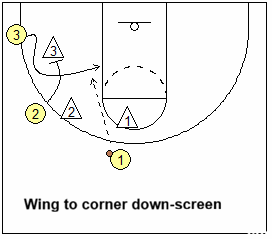
Begin with the cutter's defender either trailing around the screen or taking a shortcut underneath it. The screener's defender reacts to help prevent a score. Once players recognize those situations, introduce switching. Tell the defenders which response to use without telling the offense.
Rules
- Begin with the down screen, then play live until a basket, defensive rebound, turnover, foul, or ball out of bounds.
- The screener must establish a legal screening position, allowing the required time and distance for the defender to avoid contact. Remain stationary during contact.
- The cutter reads the defender rather than following a required route.
- The passer may pass to either teammate or attack an available opening. Do not force a pass simply because a screen was set.
- Repeat on both sides and rotate players through all three offensive roles.
Reads and Decisions
For the cutter:Set up your defender with a change of pace or direction, then cut close to the screener without pushing or displacing the screener. Read your defender's route and the position of the screener's defender.
If your defender trails:
Look to curl around the screen toward the basket when the lane is open. If the screener's defender steps into that path, avoid curling blindly into the help. Continue to available space and let the passer read which teammate the help has left open.
If your defender takes a shortcut underneath the screen:
Consider fading away from the defender into open shooting space. Stay within your shooting range and make sure the passer has a clear angle to reach you. The passer may need a controlled dribble to improve that angle.
If the defenders switch:
Recognize the new defender instead of running directly into the switch. The screener may be able to seal the cutter's original defender and become the better passing option. Maintain spacing so the passer can see and use that opening.
For the screener:
See how both defenders respond. After the cutter clears, turn to find the ball and become a scoring threat. If your defender helps on the cutter, move into the space that help leaves available. Against a switch, establish a legal seal when you have useful inside position. Do not release so early that you abandon the screen before your teammate can use it.
For the passer:
Read both the cutter and the screener. Deliver the pass when a teammate gains an advantage, using a passing angle that avoids the defenders. Do not watch only the cutter; the screener may become open as the defense reacts. If neither is available, keep the ball and continue playing.
See this video from Bob Knight (from DVD "Bob Knight: The Complete Guide to Motion Offense") on how to read the screen action:
Coaching Points
Set up the defender. A purposeful change of pace or direction makes the screen more difficult to defend. Going slowly toward the screen gives the defender time to prepare.Cut with a purpose. Use the screen to get open and score. Cut hard through the available opening, see the ball, and have your hands ready. Avoid running the same route regardless of the defense.
Coordinate the timing. When setting the screen, the screener must be established before the cutter arrives. A deliberate slip is the exception, responding to an early defensive commitment. The passer must be ready when the opening appears. A late pass can erase the advantage created by a good screen and cut.
Read the help as well as your own defender. A trailing defender may invite a curl, but another defender can take that opening away. Teach players to see the space they are entering.
The screener can score too. Setting the screen begins the action; it does not end the screener's involvement. Turn, locate the ball, and find an available passing lane after the cutter clears.
Keep the reads connected. If the cutter curls toward the basket, the screener should avoid moving into the same space. Each player's movement should give the passer a distinct option.
Between repetitions, ask briefly: “How did the defender get around the screen?” “Who helped on the cutter?” or “Which player did that leave open?”
Progressions
Let the defense choose. Allow the defenders to select their response and communicate it. The offense must recognize the coverage without advance notice.Reject the screen and cut backdoor. If the cutter's defender overplays the route toward the screen, the cutter can reject it and cut hard backdoor when the lane is open. The passer must recognize the cut early, and the screener should preserve space rather than continue into the cutter's path.
Slip the screen. If the screener's defender leaves early to help on the cutter or anticipates a switch, the screener can slip toward the basket before setting the screen. The passer looks for the opening, while the cutter maintains spacing. Teach the slip as a response to the defense, not an automatic early release that prevents the screen from being set.
Use another off-ball screen. Apply the same approach to a screen-away or cross screen from your offense. Begin with the likely defensive responses and teach the available reads rather than carrying over the same cutting rules to every screening angle.
Connection to the Full Game
Off-ball screens work best when all three offensive players read the same action. The cutter responds to the defense, the screener becomes available as defenders help or switch, and the passer recognizes which opportunity develops. These decisions allow a familiar screening action to produce different scoring options.(#8) 3-on-3: Read the Post Touch
Purpose (click to view game)
Teach players to recognize an available post entry, respond when the defense helps or double-teams, and move to support a teammate with the ball inside. The post player learns when to attack and when to pass back out.
Setup
Use one basket. One offensive player starts on a wing with the ball, a post player starts on the same-side low block, and a third teammate starts at the top. Each has a defender.The wing looks to enter the ball to the post. Defenders play live, so the entry must be earned rather than forced. If the post is unavailable, the perimeter players may pass, improve the entry angle, and allow the post to establish a new position.
Begin with the post defender playing behind or on the high side. Introduce fronting later, when players understand how to recognize backside help and create a safe entry angle.
Rotate players through all three offensive positions. This game teaches inside-out decisions that can help any player, regardless of position.
Rules
- Play live until a basket, defensive rebound, turnover, foul, or ball out of bounds.
- Initially, look for a post touch before a perimeter shot. Allow an open lay-up if the defense overplays the entry.
- After the entry, perimeter players may relocate or cut according to your team's spacing rules.
- Do not require the post player to shoot or pass. The defensive response determines the decision.
- Begin without screens so players focus on the entry, post read, and supporting movement.
Reads and Decisions
For the entry passer:See the post player's position, target hand, and defender before passing. Read the nearby help as well. Use a pass and angle that reach the post safely; do not throw the ball simply because a teammate calls for it. If the lane is closed, move the ball or use a controlled dribble to improve the angle.
For the post player before the catch:
Establish a legal seal and show a clear target. Adjust your position as the ball moves. Avoid standing behind the defender and expecting the passer to find a way through.
If the post is guarded one-on-one:
Secure the catch, locate the defender, and recognize the available scoring opportunity. Use a purposeful move toward the opening. Avoid unnecessary dribbles that give help defenders time to arrive.
If a second defender commits:
Protect the ball and find the teammate that defender leaves available. Pass before the double-team crowds you and closes the passing lanes. If a defender only reaches or briefly shows help, avoid automatically giving up a good scoring opportunity; read whether that defender actually commits.
For the perimeter players after the entry:
Give the post room to operate while remaining available. Adjust your position to create a clear passing lane rather than standing directly behind a helping defender. If your defender turns away and a clear cutting lane opens, cut with a purpose. Avoid bringing your defender into the post player's scoring space.
For the receiver of a pass back out:
Catch ready to shoot, drive against the closeout, or move the ball to an open teammate. You may also have an opportunity to re-enter the post after the defense shifts and the post player establishes a better seal.
Coaching Points
Earn the entry. A successful post pass depends on the passer's angle and the receiver's position. Both players must work to create the opening. Do not reward a forced pass that happens to get through.See the floor before the double-team arrives. The post player should locate teammates and likely help defenders early. Recognizing where help comes from makes the next pass easier.
Attack with a purpose. Against single coverage, use the available opening. Repeated backing dribbles can allow the defense to crowd the post and take away both the shot and the pass.
Help the post see you. Perimeter players should move into useful passing windows with their hands ready. Agree on simple relocation and cutting rules so two teammates do not move into the same space.
Keep cuts out of the post move. A well-timed cut can punish a defender who watches the ball, but a cut across the post player's path can ruin a scoring opportunity. Read whether your teammate is beginning a move before cutting through that space.
Use the return pass. Passing out does not end the post player's involvement. Reposition and seal again when an opening develops. An inside-out-inside sequence may create a better opportunity than the first catch provided.
Between repetitions, ask briefly: “Where did the help come from?” “Was the entry angle open?” or “Where could you move to give the post a passing option?”
Progressions
Vary the help. Have the defense alternate between single coverage, help from the entry passer's defender, and help from the top defender. Then let the defense choose. The offense must recognize who is helping and which passing lane is available.Introduce fronting. Allow the post defender to front. Teach the perimeter players to improve the angle or reverse the ball while the post repositions. A lob is an option only when the passer has a clear angle, the receiver has space, and backside help cannot intercept it. Do not make the lob an automatic response.
Remove the required post touch. Play free 3-on-3 while encouraging players to recognize useful inside opportunities. The offense must decide when a post entry creates an advantage and when another action offers a better chance.
Connection to the Full Game
A post touch can create a shot inside, draw help that opens a perimeter teammate, or lead to another entry after the defense moves. This game teaches players to recognize those opportunities together rather than treating the post catch as a signal for everyone else to stop playing.(#9) 3-on-3: Defend, Rebound, and Go
Purpose (click to view game)
Teach players to change roles quickly after a shot or turnover. The new offense reads whether to advance the ball by pass or dribble, while the new defense protects the basket, stops the ball, and matches up.
Setup
Use the full court with two teams of three. Begin with a live 3-on-3 possession at one basket. After a defensive rebound, steal, or made basket, play continues toward the opposite basket.Have a coach available to rule on fouls and out-of-bounds plays. Begin with short rounds of several trips, then rotate players or rest before repeating.
Rules
- On a defensive rebound or steal, change direction immediately. Do not stop to check the ball.
- After a made basket, the other team inbounds from the baseline as in a game.
- Use normal basketball rules for fouls, turnovers, and out-of-bounds plays.
- If no transition opportunity develops, continue into half-court offense.
- Do not require an outlet pass or a set number of passes before a shot. Players must choose how to advance safely and effectively.
- Initially, allow the defense to pick up near half court so the emphasis stays on transition decisions rather than full-court pressure.
Reads and Decisions
For the rebounder:Secure the ball, maintain your balance, and look upcourt. If a teammate is open ahead, make an accurate outlet or advance pass. If the passing lanes are covered and you have space, advance with the dribble. Avoid throwing blindly into traffic or dribbling automatically when a pass would move the ball ahead sooner.
For the players running ahead:
Create width and depth so one defender cannot cover both of you. Look back for the ball and adjust your route to remain available. If your teammate is under pressure, provide a reachable outlet rather than running so far ahead that the ball cannot get to you.
For the advancing ball-handler:
Look ahead and count the defenders between you and the basket. Use an available numerical advantage before recovering defenders arrive. If the defense gets back and takes away the break, maintain possession and flow into your half-court offense rather than forcing a pass or drive.
For the new defense:
React as soon as possession changes. The first defender back protects the basket. A teammate stops or slows the ball as soon as basket protection is established, while the remaining defender locates the other threat. Communicate and match up with the most immediate threats rather than searching only for the player you guarded on the previous possession.
Coaching Points
Finish the defensive possession. A contested shot is not a stop until your team controls the rebound. Find an opponent, establish rebounding position, and pursue the ball.Change roles immediately. Avoid watching a missed shot, celebrating a basket, or pausing after a turnover. The next decision begins as soon as possession changes.
Look ahead before putting the ball down. An open teammate may be able to advance the ball faster than the dribble. Make the pass when it is available, but do not force it just to avoid dribbling.
Run to useful space. Sprinting matters, but three players running close together makes the break easy to defend. Spread the floor and preserve clear passing lanes.
Recognize when the advantage ends. A fast break does not have to end with a rushed shot. If the defense recovers, keep the ball moving and begin the next action.
Protect the basket and communicate. On defense, sprint back through useful positions and identify the ball and the most dangerous receivers. Avoid having all three defenders chase the ball while leaving a player free near the basket.
Between trips, ask briefly: “Could we advance by pass?” “Did we still have an advantage?” or “Who protected the basket?” Keep most corrections between rounds so players experience the continuous change of roles.
Progressions
Allow earlier defensive pressure. Once players handle the basic transition, allow defenders to pressure the outlet and advancing ball. Teammates must recognize when to come back and help.Vary the opening situation. Begin a round with a coach's shot to rebound, a baseline inbound, or a controlled loose ball. Players must organize from different starting positions rather than always beginning with the same outlet.
Add a fourth player to each team. Play 4-on-4 with the same emphasis. The additional players create more traffic and require clearer communication, spacing, and decisions about advancing the ball.
Connection to the Full Game
Games do not pause while players decide whether they are on offense or defense. This continuous format connects rebounding, outlets, transition attacks, and defensive recovery. Players learn to recognize an advantage, use it before it disappears, and organize when the initial opportunity is gone.(#10) 3-on-3: Keep the Advantage
Purpose (click to view game)
Teach players to recognize a temporary advantage and connect their next decisions before the defense recovers. Players practice when to shoot, drive, or pass without relying on a predetermined sequence.
Setup
Use one basket. Three offensive players start at the top and on the two wings. Two defenders guard the wing players. The third defender starts a few steps behind the player at the top, toward half court.The player at the top begins with the ball. On the coach's signal, all players are live. The ball-handler attacks while the trailing defender tries to recover. The other two defenders decide whether to help on the drive or stay with their players.
Adjust the trailing defender's starting distance so the offense has a brief opportunity to create a good shot, but must act promptly to use it.
Rules
- Play live until a basket, defensive rebound, turnover, foul, or ball out of bounds.
- All offensive players may shoot, drive, pass, or cut. Do not require a particular number of passes.
- If the defense recovers, continue playing 3-on-3. Do not restart simply because the initial advantage disappears.
- Rotate the initial ball-handler and recovering defender, and begin from different perimeter positions.
Reads and Decisions
For the initial ball-handler:Attack the basket under control. If neither help defender stops you, finish. If a defender commits to the ball, find the teammate that defender leaves available. Recognize the recovering defender as well; avoid slowing down or exposing the ball where that defender can reach it from behind.
For the players without the ball:
Maintain useful spacing and adjust to give the driver clear passing options. Be ready before the ball arrives. Avoid moving into the driver's path or standing behind a help defender.
For the receiver:
Read the defense as the pass travels. Take an open shot within your range. If a defender closes hard, attack the opening. If the rotation leaves another teammate with a better opportunity, pass promptly. Do not automatically make an extra pass when you already have an available finish.
If the defense recovers:
Recognize that the original opening has closed. Protect possession, restore spacing, and create another opportunity with a pass and cut, a screen, or another action from your offense. Do not force a shot simply because the possession began with an advantage.
Coaching Points
Recognize the advantage early. Players should see the recovering defender's position before the action begins. Attack with a purpose rather than waiting for the defense to get organized.Make each action threaten the defense. A drive should threaten to score, and a pass should reach a teammate who can use the opening. Passing around the perimeter without a threat allows the recovering defender to catch up.
Prepare during the pass. The receiver should already be locating the basket, the closing defender, and available teammates. Catching and then beginning to look wastes valuable time.
Keep the advantage moving. An immediate shot, direct drive, or timely pass can make the next defender react. An unnecessary pause or dribble can let the defense recover. Prompt decisions still require balance and control.
Take the good opportunity. Do not turn the possession into a passing exhibition. Finish strong when a lay-up is available, and take an open shot that fits the player's range and your team's shot selection.
Know when to begin again. If the defense gets set, the answer is to create a new opening. Maintaining possession and flowing into another action is a useful decision too.
Between repetitions, ask briefly: “Where was the first advantage?” “Did our next action keep it?” or “When did the defense recover?”
Progressions
Change the starting location. Begin with the ball on a wing and its defender trailing. Adjust the other offensive positions to preserve spacing. Players must recognize how a different driving angle changes the help and passing options.Vary the recovery distance. Move the trailing defender closer as players improve. Keep enough of an opening that the offense can use it with a timely decision.
Create the advantage through an action. Begin with a live closeout, pass and cut, or ball screen instead of placing a defender behind the ball. Once the offense gains an edge, play continues through the next defensive rotation. If no advantage develops, let players continue working to create one.
Connection to the Full Game
An initial drive or screen may begin an advantage without producing the final shot. The next player must recognize the rotating defense and make another useful decision. This game brings together the reads practiced earlier: attack an opening, draw help, find an available teammate, and respond to the next closeout.(#11) 3-on-3: Read the Clock
Purpose (click to view game)
Teach players to adjust their decisions to the time remaining. The offense works to create a good shot before time expires, while the defense communicates and contests without giving away an unnecessary foul.
Setup
Use one basket with three offensive players spaced around the perimeter and three defenders. A coach controls a visible clock or gives a clear countdown. Begin with 12 seconds available to complete the possession.Start with a check of the ball at the top. The clock begins when the offensive player receives it. Change the starting location on later possessions.
Explain that this represents the final seconds of a period or a possession with a shot clock. For teams that do not use a shot clock, the end-of-period situation still applies.
Rules
- Play live until a basket, defensive rebound, turnover, foul, ball out of bounds, or time expires.
- A shot must leave the shooter's hand before the final signal. A shot already in flight can still count.
- The offense may use cuts, screens, drives, and passes from your team's offense.
- Do not require every player to touch the ball or mandate a particular action.
- If the offense rebounds a missed shot, play continues with whatever time remains. Do not reset the clock.
- For a defensive non-shooting foul or a ball knocked out of bounds, retain the remaining time and restart with an offensive inbound. Handle shooting fouls according to your normal practice rules.
Reads and Decisions
For the ball-handler:Know the time before beginning. With several seconds available, initiate a purposeful action that can create a good shot. Avoid dribbling in place while teammates wait. As time becomes short, recognize when another pass or elaborate move would leave too little time to finish.
For the players without the ball:
Become useful immediately. Create space, cut to an opening, or set a screen that fits the action. Be ready to catch and shoot or finish. A player receiving the ball with two seconds left has different options from a player receiving it with ten seconds left.
For the receiver:
Read the clock and defense before the catch. If time allows, attack a hard closeout or make a pass that creates a better shot. With only a moment remaining, an available shot may need to go up immediately. Avoid catching, pausing, and discovering too late that time has expired.
For the defense:
Know how much time remains and communicate through screens and cuts. Contest the shot under control. Avoid reaching, biting on a late shot fake, or fouling a difficult attempt that the offense must rush to release.
Coaching Points
Play promptly without panicking. Limited time calls for clear decisions and purposeful movement. Rushing an off-balance shot at the beginning of the possession wastes the time available to create something better.Use an action your players know. A familiar pass and cut or ball screen is more useful than a complicated sequence players cannot organize quickly. Choose an action that fits the time and starting positions.
Take the good shot when it appears. In this game, the goal is to score before time expires. Do not pass up an open lay-up merely to use every second. Holding for the final shot is a separate tactical choice that depends on the game situation.
Prepare before receiving. Locate the basket, defender, and clock while the ball travels. Have your feet and hands ready so the catch leads directly into the appropriate action.
Leave time for the finish. A pass made before the horn is not enough; the receiver still needs time to catch and release the shot. Learn how much time your players need for a catch-and-shoot or a catch, dribble, and finish.
Evaluate the choice in context. A contested shot with one second remaining may be a reasonable attempt. The same shot with ten seconds left may overlook a better opportunity. Judge the decision by both the defense and the available time.
Between possessions, ask briefly: “How much time did you have when you caught it?” “Was there time for another pass?” or “Did we create our shot early enough?”
Progressions
Vary the time. Alternate possessions with 12, 8, and 5 seconds. Announce the time before each start so players must adjust their approach rather than repeat the same sequence.Begin with an inbound. Start from a sideline or baseline inbound. Specify the time remaining, and begin the clock when the ball is legally touched on the court. The inbounder and receivers must organize quickly and recognize the first available opportunity.
Add a score situation. Specify that the offense is down one, tied, or down three on the final possession. Discuss how that changes shot selection. If a three-pointer is needed, use an appropriate three-point line and reserve that variation for players with the necessary shooting range.
Connection to the Full Game
The clock changes which options remain useful. This game helps players combine their reads of the defense with an awareness of time, so they can organize an action, recognize a good opportunity, and complete the play before the horn.(#12) 4-on-4: Put the Reads Together
Purpose (click to view game)
Give players an opportunity to apply their decision-making in a more complete team setting. The offense chooses its actions and responds to the defense, while the coach observes which reads carry over without prompting.
Setup
Use one basket with four offensive players and four defenders. Begin in a spacing alignment from your offense, such as four-out or three-out with one post player.Use normal half-court play. Unlike the earlier games, do not prescribe an opening drive, cut, screen, or post entry. Let players organize and create their own opportunities using actions they know.
Play short rounds of several possessions. Change possession after a basket, defensive rebound, or turnover, checking the ball at the top before the next possession. On an offensive rebound, continue playing.
Rules
- Use normal basketball rules and your team's usual spacing principles.
- Allow players to choose when to pass, cut, screen, drive, or enter the post.
- Do not require a set number of passes or a particular player to shoot.
- Play through the possession unless a correction requires an immediate stop.
- Rotate players through different positions so everyone practices making decisions with and without the ball.
Reads and Decisions
For the player with the ball:Recognize whether you have an immediate scoring opportunity or need to help create one. Read the defender's position, available driving space, and your teammates. Use a purposeful action rather than dribbling while waiting for the coach to direct you.
For the players without the ball:
Read both the ball and your defender. Maintain useful spacing, cut when an opening develops, and screen when it can help a teammate. If the ball penetrates or enters the post, adjust to provide passing options without crowding the scoring space.
When an advantage develops:
Use it before the defense recovers. The next player may have a shot, a drive against a closeout, or a pass to a better-positioned teammate. Recognize the opportunity without adding an unnecessary move or pass.
When the first action is covered:
Continue playing. A covered cut, defended screen, or stopped drive does not end the possession. Restore spacing and connect to another action rather than forcing the original option.
For the defense:
Communicate through screens, provide help according to your team's rules, and recover to available threats. Complete the possession by securing the rebound. Live, purposeful defense gives the offense meaningful decisions to make.
Coaching Points
Observe before directing. Give players several possessions to show what they recognize on their own. Calling every cut or pass from the sideline makes it difficult to tell whether players are making the decisions themselves.Choose a narrow observation focus. During one round, watch how players respond to penetration. During another, watch screening reads or movemeent after passing. Trying to correct every detail at once can overwhelm players and interrupt the game.
Divide the coaching responsibilities. If you have an assistant, have one coach watch the offense while the other watches the defense. One person cannot see everything happening on both sides of the ball. Compare observations between rounds; what looks like an offensive mistake may also reflect good defensive positioning or help. If coaching alone, alternate your focus between offense and defense over several rounds.
Look beyond the ball. An unsuccessful drive may begin with poor spacing. A missed passing opportunity may result from a teammate standing behind a defender. Evaluate how the other players help or limit the ball-handler's choices.
Recognize good decisions. Point out the timely pass, purposeful cut, or relocation that created a shot, even when the shot misses. Also recognize when a player wisely keeps the ball rather than forcing a covered option.
Keep feedback brief and specific. Between rounds, identify one useful example and one adjustment. Ask players what they saw, then let them return to live play and try the adjustment.
Return to a smaller game when needed. If the same read repeatedly causes difficulty, isolate it in 2-on-2 or 3-on-3. Give players focused repetitions, then return to 4-on-4 to see whether the learning carries over.
Between rounds, ask briefly: “What created our best shot?” “What did we do when the first option was covered?” or “How did our spacing help the player with the ball?”
Progressions
Change the alignment. Use another spacing arrangement from your offense. Players must recognize how the available space changes their cutting, driving, screening, and passing options.Add a temporary teaching constraint. If players are overlooking a particular action, use a short round that encourages it. For example, require a post touch to revisit inside-out reads, then remove the requirement and observe whether players recognize useful post opportunities on their own.
Move to 5-on-5. Add the final offensive and defensive players and use your normal team offense. Watch whether players maintain spacing and recognize the same reads with more traffic and additional help defenders.
Connection to the Full Game
The earlier games simplify particular decisions. This game asks players to recognize when those decisions arise without being told which action comes next. Moving from focused games to open play helps coaches assess whether players can connect their skills, reads, and teamwork in the flow of basketball.Using These Games in Practice
You do not need to use all 12 games or teach every progression. Choose one or two that address decisions your players are struggling with, and return to them over several practices.Start with a Decision
Identify the problem before choosing the game. Are players passing too late on the break? Standing behind help defenders? Running the same cut regardless of how the screen is defended? Select a game that presents that decision repeatedly.Explain the purpose in a sentence or two. Give players one clear cue, such as "Attack for a lay-up; if the defender stops you, pass," then let them play.
Keep the First Version Simple
Begin with the basic setup and only the rules needed to bring out the read. Give players time to understand the situation before adding another defender, a tighter time limit, or more defensive choices.Adjust the challenge to the players. If they rarely find a scoring opportunity, provide more space or a larger starting advantage. If the offense scores without having to read anything, reduce the advantage or give the defense another option.
Let Players Play, Then Teach
Use short rounds that provide several opportunities to make the decision. Avoid stopping every mistake. Players need a chance to recognize the situation, try a response, and experience the result.Between rounds, ask what they saw and offer one specific adjustment. When useful, briefly recreate a possession to show the opening, then resume live play. Keep players active rather than turning the game into a long explanation.
Connect the Read to the Skill
Notice whether the difficulty is recognizing the opportunity or executing the response. A player who sees the open cutter but cannot deliver the pass needs different help from one who never sees the cut.Use a brief skill rehearsal when needed, then return to the live game. Players need both the ability to execute a skill and the judgment to use it at the right time.
Build Toward Team Play
A useful practice sequence is to rehearse a relevant skill, play a small-sided game that requires it, and then use 4-on-4 or 5-on-5 to see whether the read carries over. This can be a short part of practice rather than the entire session.For example, work briefly on passing to a cutter, play 2-on-2: Pass, Cut, and Read, then move into team offense. Watch whether players recognize cutting opportunities without being prompted. Revisit the smaller game in later practices if the same difficulty returns.
Teach Players to Recognize, Decide, and Act
Basketball decisions rarely occur in isolation. One player's drive changes a defender's position, which creates a passing opportunity, which leads to another closeout and another decision.Small-sided games let coaches simplify those situations without removing the opponents and choices that make them basketball. Start with a clear purpose, give players repeated opportunities to read the defense, and help them connect what they see with an appropriate action.
Over time, look for players who need fewer instructions from the sideline because they recognize the situation themselves. That is the goal: players who can use their skills, read the game, and respond together.
Related page:
Want More Coaching Content?
Get access to more complete articles, diagrams, and coaching tools with Premium Membership.
View Membership Options


