
Next season, as our players change, we may use other plays and options. Use those that will best benefit your team. Don't overload your players and try to teach too many of these at once. Also see the 4-Out High plays.
The following plays are used in conjunction with the "Low" set, i.e. with our post player playing low. In teaching our 4-Out system, we first teach the basic offense(s), and then add a few of these plays as the season progresses. Here are a number of set plays that you can run out of the 4-Out offense:
On this page:
"Big"-Series
The "Big" series of plays gives you many options. Learn the basic "Big" and "Big-Down" plays, and then add other options gradually."Big"
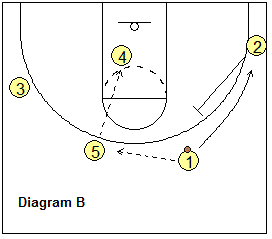
We like to use this play if we think our inside post player can beat his/her defender 1-on-1 with a post move. This is a great play also if the post defender is in foul trouble as it exposes him/her to another fouling situation, or he/she may simply play "soft" defense and allow us to score. We like the "hi-lo" feed to the low post coming from the top, as there is usually no helpside defense when the ball is at the top.See the diagrams below. O1 dribbles off toward the right wing as O2 locates in the corner. O4 moves to the top of the key and O1 passes to O4. O5 makes an aggressive post-up in the paint and O4 tries to make the "hi-lo" pass inside to O5 (oftentimes a "step-around" left-handed curl-bounce pass). O5 scores or gets fouled. This is our first option. The pass from O4 to O5 must happen quickly so as to avoid O5 getting a three-second violation. Timing is important.
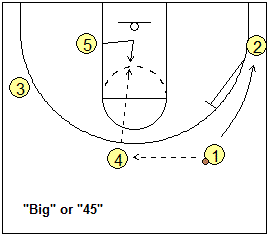
After O1 passes to O4, O2 backscreens for O1, and O1 slides to the wing-corner area. If the pass inside to O5 is denied, O4 could skip-pass over the top to O1. O1 could shoot the three-pointer, or pass inside to O5 who posts up on the ball-side as soon as the pass goes to O1. Another option that we use when the pass from O4 to O5 is being denied is to have O4 fake a pass to O5, and make a quick dribble move to the hoop around the right side of the defender.
"15"
After you run "Big" a couple times, the defense may be looking for this play and may overplay and deny the pass from O1 to O4. In this case, O4 can simply backcut up the right side of the lane and get the pass from O1 for the lay-up. Another option is, instead of O1 passing to O4, O1 passes inside directly to O5 posting up. We call this option "15".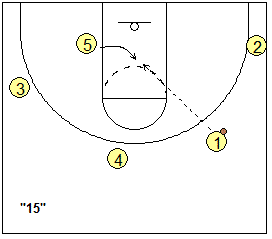
"Big-Left"
This is the same play as "Big" except that we run it on the left side of the court. Both post players O4 and O5 move to the right side of the lane, and this opens the left lane seam for O1 to dribble-penetrate (similar to Loyola) as a first option.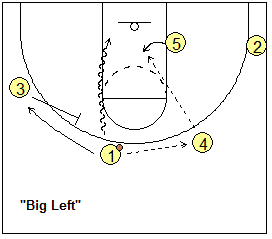
If the dribble-drive is not open, O1 dribbles to the top left side and O4 moves to the top right position. O2, O3, and O5 are in their usual positions. The pass goes from O1 to O4, and then O4 to O5 posting up inside, just like in "Big". The same "Big" options are in play... O3 backscreens for O1 and the pass could go over the top to O1 if O5 is denied the inside pass.
"Big-Down" or "54"
Now look at the diagrams below. We may have a situation where we think O4 could effectively post-up his/her defender, or maybe the X4 defender has four fouls. In this case we run "Big-Down" (or "54"). This is the same play as "Big", except we start with O4 down-screening for O5, who comes up top and receives the pass from O1. O4 posts-up inside for the pass from O5. In diagram B, we again have the option of O5 skip passing to O1 in the corner, similar to "Big" above.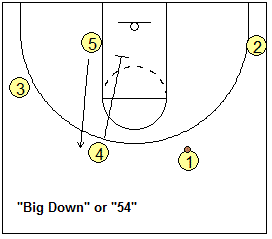
"Big-43"
This is another option using the "Big" setup. See the diagrams below. O5 moves out to the short corner to open up the inside. O1 passes to O4. O4 passes to O3, follows the pass and sets a ball-screen for O3. O3 dribbles around the screen and attacks the top seam for a shot or lay-up. O4 pops outside to the arc. If O2's defender is in helpside, O3 can kick the ball outside to O2 in the corner for the 3-point shot. A dump pass to O5 might also be there.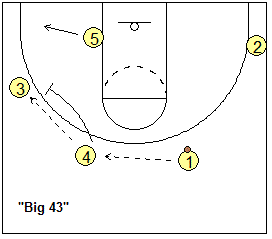
"Big-Double"
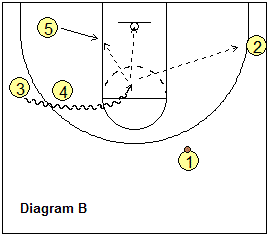
This is another option off "Big". The first part is designed to get O2 an open 3-point shot, or a dribble-drive to the hoop. See the diagrams A-F below.Diagram A: The pass goes from O1 to O4 and from O4 to O3. O1 and O4 set a staggered double-screen for O2.
Diagram B: O5 moves to the right block. O2 cuts around the staggered screens looking for the pass from O3 and the 3-point shot, or a dribble-drive up the left lane line, as our first options.
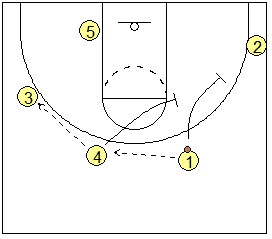
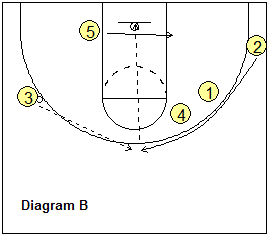
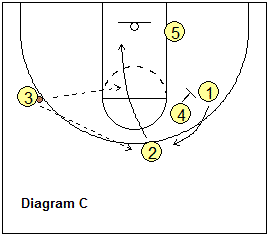
Diagram C: If the pass at the top to O2 is denied, O2 back-cuts through, still looking for the pass from O3 and a lay-up. O4 screens for O1. O1 now comes around the screen looking for the pass from O3 at the top. After the screen, O4 moves to the right wing.
Diagram D: O1 could shoot the 3-pointer here. If not, O3 down-screens for O2 and O5 back-screens for O4, and O4 cuts to the hoop.
Diagram E: A pass from O1 to any of the cutters is an option. O2 could get the 3-point shot, or O3 and O4 could get the pass inside.
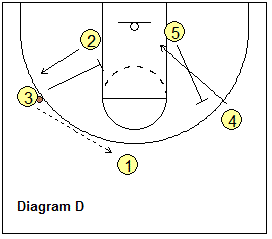
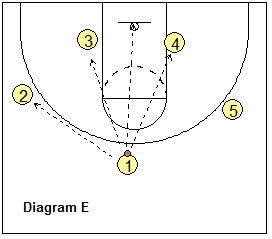
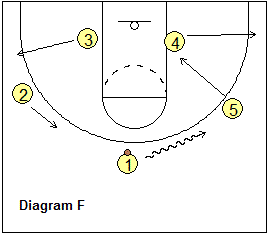
Diagram F: If nothing happens, O1 dribbles right and we rotate back into the 4-out set, with O4 in the right corner now, and O1 and O2 on top, and O3 in his/her usual spot on the left side.
"Loyola"
We call this "Loyola" because the "L" in Loyola stands for the left seam that we want our point guard, O1, to take off the dribble. This play is designed to get our O1 to attack the left seam, especially if the defense is overplaying the right side. We use this against man-to-man defenses. Start in our "Big" setup (Diagram A). You can run this out of the 4-out set, a 1-3-1 set, or a 3-out, 2-in set with one post player high.Notice how the left seam really opens up for our point guard (O1) when O5 and O4 move to the right block and elbow, and O3 drops down to the corner.
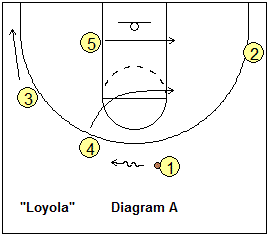
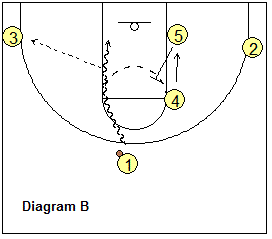
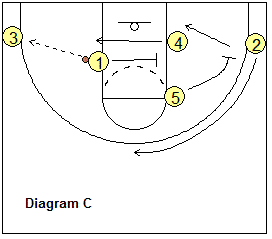
O1 dribbles left and attacks the left seam, looking to score a layup as the first option (Diagram B), while O5 backscreens for O4 and then backscreens for O2. O4 moves to the block and O2 moves out on top as our safety. If O3's defender slides down and stops O1, O1 passes out to O3 in the corner (Diagram C) and then O1 screens for O4. O4 cuts to the ball-side block, as O1 moves out to the opposite corner-wing area. O3 could shoot or pass inside to O4 posting up.
If O3 takes the corner shot, O5 should get rebounding position on the backside for the long rebound.
"Loyola-2"
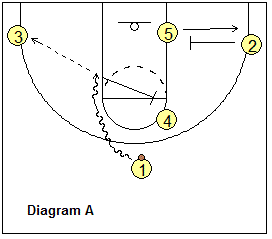
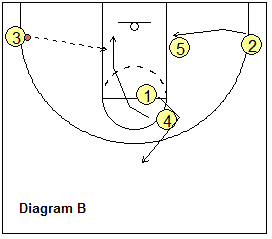
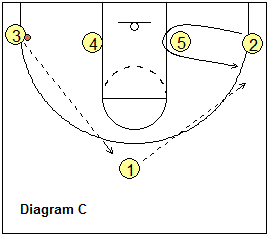
This play is similar to the "Loyola" play above in that both posts move to the right side of the lane (Diagram A below), O3 slides down to the corner, and O1 takes the left seam. In this play however, O1 passes to O3 in the corner and then turns and back-screens for O4. O4 cuts around the screen for the possible pass from O3 and the lay-up. After screening, O1 moves back out on top.We also try to get O2 open on the opposite side. If O2's defender is in help-side in the paint, O5 just steps over and back-screens O2's defender (Diagrams A and B). If the X2 defender is outside on O2 and the ball reverses back to O1, O2 can curl-cut around O5 to get open for the pass from O1, and possible 3-point shot.
"53"
This is a simple back-screen, pin and roll play. Keep in mind that the simple plays often work the best, if executed properly. See the diagrams below. O5 back-screens for O3. O3 cuts around the screen looking for the pass from O1. The pass may be there, but oftentimes the defense will switch the back-screen and O3 will be denied the pass.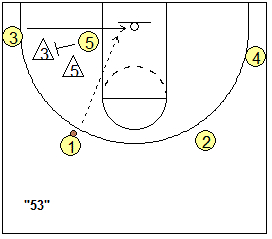
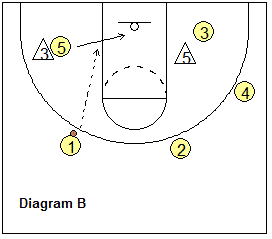
In this case, O3 clears out to the opposite short corner, taking the X5 defender with him/her. O5 seals (pins) the X3 defender and rolls to the hoop for the pass and lay-up. Even if X3 maintains defensive position, O5 should still have the size advantage for a post-up inside.
"34"
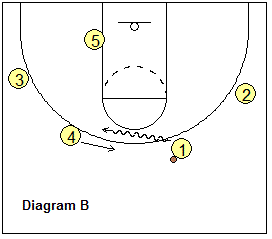
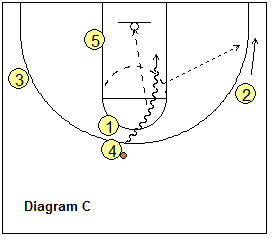
We especially like this play if we have good athletic O4 who can shoot or attack the basket. See the diagrams below. This is a weave-screen type of play and actually uses two screens to get O4 open for a shot or lay-up. O3 screens for O4. O1 dribbles at O4, makes the hand-off and screens for O4. O4 comes around the weave-screen-handoff looking for the 3-point shot, a pull-up jumper at the free-throw line, or a dribble move for a lay-up.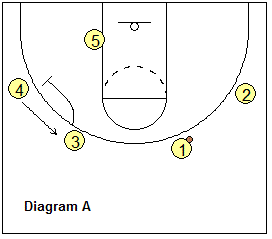
"13"
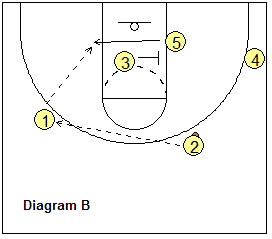
There are two ways of running this play depending on how O3 comes off the screen. Diagrams A and B show the first option. O1 screens for O3. O3 cuts hard around the screen, looking for the pass from O2. If the pass is not there, O3 screens for O5, as O2 passes to O1 (who has popped outside after screening for O3). O1 then looks to pass inside to O5 posting up.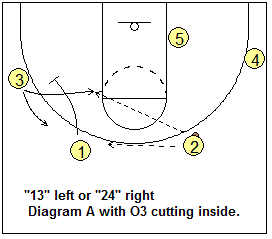
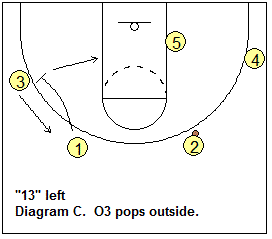
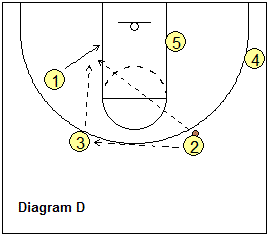
The second option is shown in diagrams C and D. O1 screens for O3, but this time O3 comes over the screen to the outside and receives the pass from O2. Meanwhile, after screening, O1 pins the X3 defender and rolls to the hoop for the pass from O3.
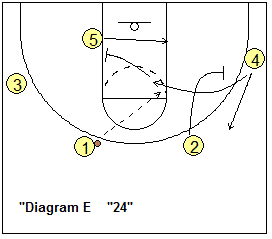
"24"
"24" is the same play as "13", except it is run to the right side. See diagram E."Black"
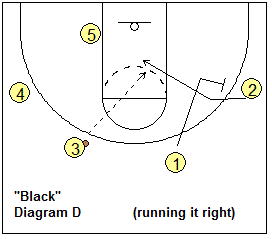
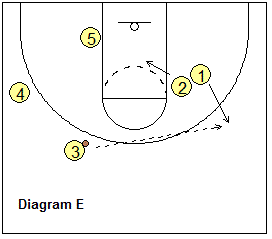
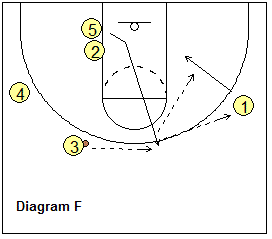
You can run this left or right... the top diagrams are running it to the left and the lower diagrams show it going right.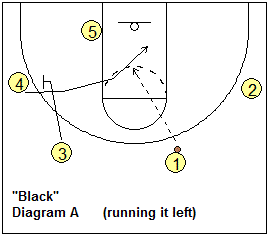
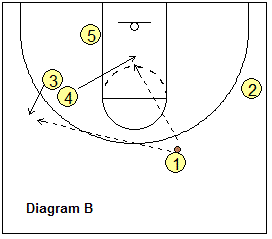
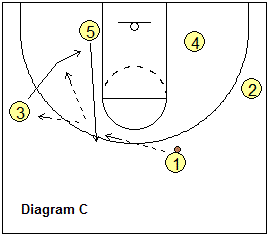
The opposite top perimeter player (either O3 or O1), sets a down-screen for the lower perimeter player (either O4 or O2). This down-screen is almost like a back-screen, allowing O4 (or O2 - if right) to curl around the screen, looking for the pass from O1. The screener (either O3 or O1) pops outside and could receive the next pass. If not, O5 cuts up and gets the pass. Now O3 (or O1) could get the next pass, or may have a chance to back-cut for a pass from O5 and the lay-up.
"52-Curl"
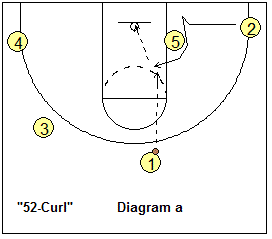
We like this play when we have good athletic O2 who can shoot or attack the basket, and especially in O2 is left-handed. This really is a very simple play, but if executed well, is very effective. We start with O5 on the right low block area. O2 cuts down inside along the baseline, underneath O5, suddenly stops and then curl-cuts over O5 for the pass and short turn-around jump shot.The entry pass could come directly from O1. If you find that the play is clogged up due to O4's defender dropping into helpside, then the next time, have O1 pass to O3 and let O3 make the pass to O2. Passing the ball to O3 will tend to keep the X4 defender outside on O4 (as O4 is now just one pass away).
If the X5 defender switches the screen and follows O2 (to the opposite block), O5 immediately posts-up the smaller X2 defender looking for the quick pass and chance to score.
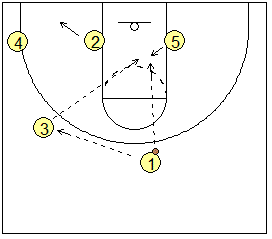
"14"
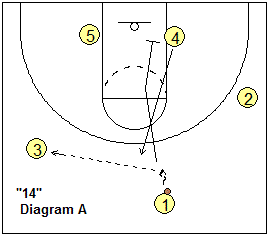
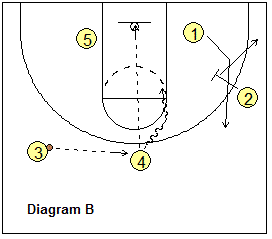
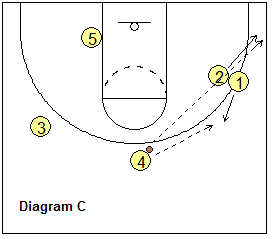
We run this play out of either the "4-Low" set (4-out motion offense) or the 3-out,2-in motion offense. We especially like this play if we have good athletic O4 who can shoot or attack the basket.See the diagrams below. This play starts with O4 inside, but the play ends up in a 4-out set. O1 passes to O3, and then O1 down-screens for O4. O4 cuts out on top and gets the pass fromO3. O4 could shoot or "take" it to the lane for a shot or lay-up. Meanwhile, O2 down-screens for O1. Note that this screen is set rather high, just inside the arc. O1 comes around this screen and could get the next pass. After screening, O2 flares to the corner, and could also receive a skip pass for a shot. Notice in diagram C that we are now 4-out.
"Weave-Screen Plays"
The weave screen (or "W") plays are simple hand-off plays that can free up a perimeter player for either an outside shot, or a dibble-drive to the hoop. The diagrams below show a 3-out, 2-in set, but these plays can also be run with the 4-Out and 5-Out sets."W2", where O1 dribbles at O2 (diagram A), hands the ball off to O2 and screens the X2 defender. O2 comes around the screen for a 3-point shot, or a dribble-drive to the lane (diagram B).
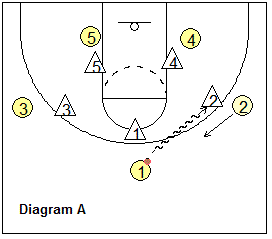
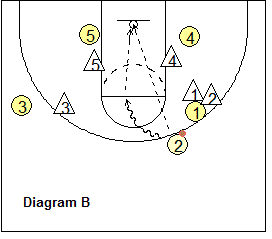
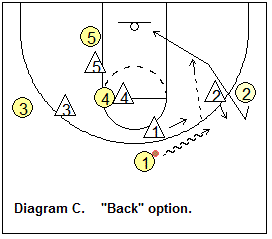
After running this a couple times, the X2 defender will often cheat out over O1 and try to stop the hand-off... here we run the "back" counter option, where O2 reads this and simply back-cuts for the pass from O1 and the lay-up.
"W3" would be the same play, but run at O3... O1 dribbles at O3, and O3 gets the hand-off and shot. "W4" would be the same play as "34" described above.
"Purdue"
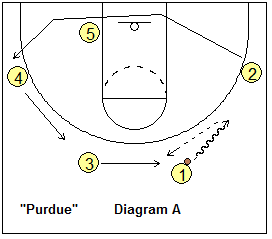
In our normal offensive scheme, we like to have our point-guard O1 dribble-drive the seams and kick out to a shooter on the perimeter. But some years, our O1 is our best outside shooter and we'd like to have someone else dribble-drive and kick out pass to O1. We also especially like this play if we have good athletic O4 who can shoot and attack the basket. This play is unusual in it's simplicity in that it involves no screens (other than the hand-off screen), but relies on player movement, rotation, and passing.See the diagrams below. We start in 4-out "Low" as seen in diagram A. O1 dribbles to the right wing, as O2 cuts through to the opposite side and O3 and O4 rotate up and over. O1 passes back to O3 and O1 slides down to the corner. O3 dribbles left toward O4. O4 comes around O3 and gets the hand-off and attacks the right seam up the lane. O4 can drive for the lay-up, take a pull-up jump shot, dump it it to O5, or kick pass to O1 for a 3-point shot in the corner.
"Penn"
We start in the 4-Out "Low" set (diagram A below). This play starts just like "Purdue" above. O1 dribbles to the right wing as O2 cuts through to the opposite side. O3 and O4 rotate up and over. O1 passes back to O3. O3 passes to O4 (diagram B), and O4 passes to O2 cutting around O5 to the left corner-wing area. O4 cuts through and could get the pass back from O2, but mainly O4 is clearing out the top seam for O2, and O4 goes to the opposite corner. O2 then attacks the top seam with the dribble, looking for a short pull-up jump-shot at the elbow or in the paint (diagram C). If O2 draws in the helpside defense (X1 and X4), there are multiple kick-out passing options to O1, O4 and O3. A dump pass to O5 is another option.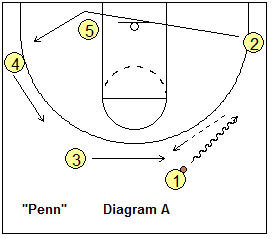
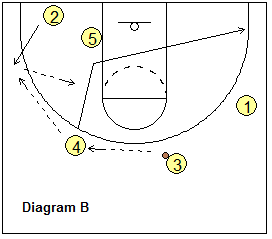
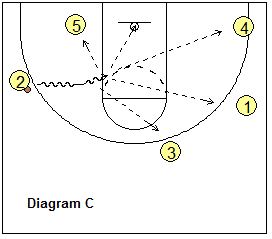
This play is good for a shooting guard (O2) who is not real adept at attacking (with the left-hand dribble) the top seam from the right side of the floor. So instead we have O2 cut through to the left side, where he/she can now attack that seam with the right hand dribble. It's nothing complicated... it's just trying to put your players in a position where they have a better chance of being successful.
"Florida"
Submitted by Mark Lane, Ohio Express Basketball and Miller Lady Falcons Basketball.This is a simple flare-screen play that can get you an open 3-point shot for O1, or a "slip" cut and lay-up for O2. In diagram A, O1 passes to O4, as O2 comes up and sets a flare-screen (back-screen) for O1. O1 cuts hard over the screen to the wing (diagram B) and gets the two-handed overhead pass from O4 for the open 3-point shot. Another option is to feed the post O5 here.
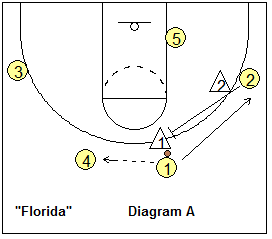
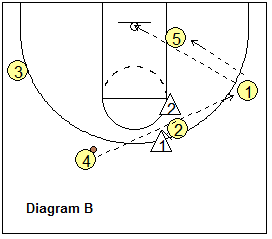
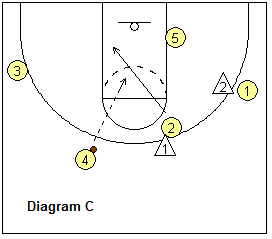
Diagram C shows what happens if the defense switches the flare-screen. O1 will not be open on the switch. Instead, O2 reads the switch, seals the X1 defender and slip-cuts to the hoop for the pass and lay-up.
An important pointer... make sure that the flare-screen is set high, almost at the lane line extended, as this creates good spacing for the pass to wing O1. If that screen is set too low, oftentimes the spacing is not good for either the pass or a shot.
"Double"
Submitted by Mark Lane, Ohio Express Basketball and Miller Lady Falcons Basketball.It's "double" because of the double-screen inside for O1. In diagram A, O1 passes to O4. Note that O3 has moved inside below O5 to set a double-screen for O1. As O1 cuts around the screens to the ball-side corner, O4 dribbles down to the wing and might pass to O1 in the corner for a 3-point shot.
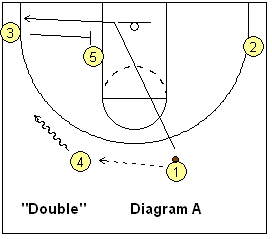
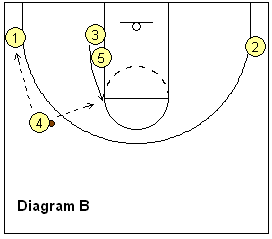
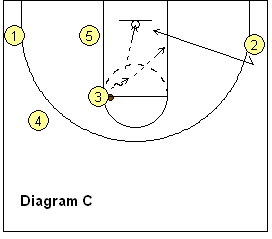
After O1 clears the double-screen, O3 cuts around O5 up to the ball-side elbow and gets the pass from O4 (diagram B). O3 shot-fakes and dribbles into the paint for a possible short jump-shot, or could pass to O2 back-cutting from the right corner (diagram C).
"Scissors"
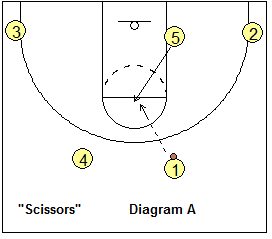
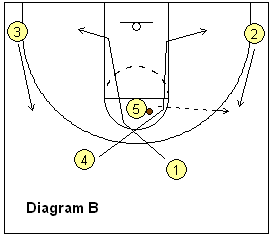
Submitted by Mark Lane, Ohio Express Basketball and Miller Lady Falcons Basketball.O5 starts low (either side) and cuts to the free-throw line and receives the pass from O1 (diagram A). O1 and O4 "scissors-cut" around O5 (diagram B) and either one could get the hand-off or a "dump-down" bounce-pass from O5. The two cutters have to time their cuts so they are not simultaneous and running into each other. You could have O1 cut first and then O4, or vice-versa. After cutting, both move out to the corners, as O2 and O3 rotate up to the wings. Although not shown here, here's another option (if you have an athletic O5)... after both cutters clear, O5 shot-fakes and takes the defender 1-on-1 with a dribble-drive to the hoop.
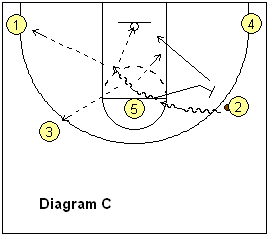
If nothing develops, O5 passes out to either wing, follows the pass and ball-screens for the wing (O2 in diagram C), and runs the pick and roll with the wing player. O2 looks to attack off the screen for either a pull-up jump-shot, a take to the hoop and a lay-up, a pass to O5 rolling off the screen, or a kick-out pass to either O3 or O1 for 3-point shots. If O2 stops short on the dribble, O3 could back-cut to the hoop for a pass from O2 and a lay-up.


