


Basketball Defenses
By Dr. James Gels, From the Coach’s Clipboard Basketball Playbook"Helping coaches coach better..."
Coach, looking for an organized library of helpful basketball information? Coach's Clipboard is a long-standing trusted basketball coaching resource used by coaches worldwide, at all levels - a basketball coach's encyclopedia.
Watch Video Register now
Tip: Basketball Coaching 101 - How to use this basketball playbook
Webmasters: feel free to link directly to any of these articles, but no framing please (see Copyright Restrictions).
Watch Video Register now
Tip: Basketball Coaching 101 - How to use this basketball playbook
Webmasters: feel free to link directly to any of these articles, but no framing please (see Copyright Restrictions).
Categories of Half-Court Defenses:
- Man-to-man defenses
- Zone defenses
- Combination "junk" defenses
- Half-court presses and traps
- Defending inbounds plays
- Press Defenses
I have seen coaches go man-to-man anytime the point guard made the first pass to the right side, and go 2-3 zone whenever that first pass went to the left side. Some coaches will change defenses after a made free-throw, or after a time-out, or will call out defenses from the sideline. The main thing... in trying to confuse the offense, make sure your own players aren't the ones who become confused!
First and foremost, you really have to work hard on defense in practice (see defensive drills), and instill the mind-set in your players.
Defenses
- Man-to-Man Pressure Defense
- Basic Man Defense Principles
- Trapping the Low Post
- Pack Line Defense
- Bob Kloppenburg's SOS Pressure Defense
- Defending the Pick and Roll
- Defending Without Fouling
- Principles of Zone Defense
- 2-3 Zone Defense
- Al Marshall's 2-3 Zone
- Buzz - Twilight Zone
- Circle Defense
- 1-3-1 Zone Defense
- 1-2-2 and 3-2 Zone Defenses
Man-to-Man Defense
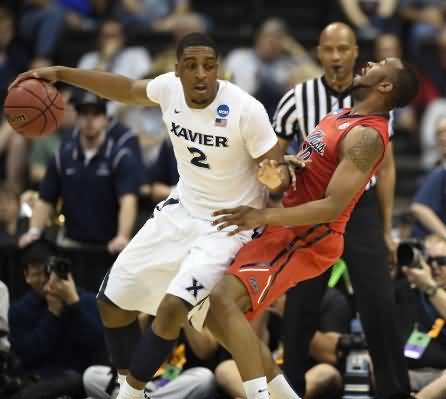
Man-to-man defense has each defender assigned to defend a certain offensive player - his or her "man". Sounds simple enough, but great man-to-man defense is much more than that.
On-ball defenders contain the ball while adjacent defenders "hedge" in the seams to stop dribble-penetration. Defenders two-passes away from the ball drop off their man into "helpside" defense. So away from the ball, man-to-man defense looks a lot like a zone defense, while you have a defender pressuring the ball. If your players are less athletic, consider the "pack line" defense.
My personal belief is that all young players MUST learn how to play man-to-man defense. Even high school teams that play zone defense will be stronger defensively if every player can play pressure, on-ball defense. Understanding helpside defensive principles makes learning zone rotations easy for most players. See: "Teaching Basketball by Progression".
My personal belief is that all young players MUST learn how to play man-to-man defense. Even high school teams that play zone defense will be stronger defensively if every player can play pressure, on-ball defense. Understanding helpside defensive principles makes learning zone rotations easy for most players. See: "Teaching Basketball by Progression".
Man-to-Man Pressure Defense... this article has everything required for man-to-man "team" defense... on-ball pressure, deny, helpside, preventing dribble-penetration, defending the post, cutters, screens and out-of-bounds plays. Two trapping tactics ("Red" and "Side-Fist") are also presented. The animation is very helpful.
Basic Man-to-Man Defense... the basic principles.
Trapping the Low Post... defending a dominant post player.
Pack Line Defense... a sagging man-to-man defense that helps protect the paint and deny dribble-penetration.
Bob Kloppenburg's SOS Pressure Defense - 3-part series:
Defending Screens... over, under and ice techniques vs on-ball screen. Also inside post screens, lateral screens, down-screens, back-screens, etc.
Defending the Pick and Roll... from Coach Joao Costa.
Defending Without Fouling... become a disciplined team that doesn't foul.
Defensive Tips... basics for players.
Defensive Intensity. Turn up your defensive intensity by Charting Deflections.
Basic Man-to-Man Defense... the basic principles.
Trapping the Low Post... defending a dominant post player.
Pack Line Defense... a sagging man-to-man defense that helps protect the paint and deny dribble-penetration.
Bob Kloppenburg's SOS Pressure Defense - 3-part series:
Overview of the SOS Pressure Defense - an overview of the SOS defense from legendary NBA coach Bob Kloppenburg.
Bob Kloppenburg's Half-Court SOS Pressure Defense - details of the half-court SOS pressure defense.
Bob Kloppenburg's Full-Court SOS Pressure Defense - SOS defense - transition and full-court.
Defense for the Last Few Seconds of the Game... defensive strategies for the end of a close game.Bob Kloppenburg's Half-Court SOS Pressure Defense - details of the half-court SOS pressure defense.
Bob Kloppenburg's Full-Court SOS Pressure Defense - SOS defense - transition and full-court.
Defending Screens... over, under and ice techniques vs on-ball screen. Also inside post screens, lateral screens, down-screens, back-screens, etc.
Defending the Pick and Roll... from Coach Joao Costa.
Defending Without Fouling... become a disciplined team that doesn't foul.
Defensive Tips... basics for players.
Defensive Intensity. Turn up your defensive intensity by Charting Deflections.
Drills for Teaching Man-to-Man Defense:
Breakdown Drills for Teaching M2M Defense... breakdown drills for teaching man-to-man pressure defense.
Shell Drill... helpside, deny, hedge, on-ball positioning.
M2M Positioning Drill... helpside, deny, on-ball positioning.
Defense 1-on-1 Drills... defending 1-on-1, on-ball defense.
Defensive Close-Outs and Drills... how to close-out on the ball.
Trapping Drills... learn to trap.
Take the Charge Drill... rotate and take the charge.
3-on-3 Competitive Defensive Drill... improve your team's intensity.
Breakdown Drills for Teaching M2M Defense... breakdown drills for teaching man-to-man pressure defense.
Shell Drill... helpside, deny, hedge, on-ball positioning.
M2M Positioning Drill... helpside, deny, on-ball positioning.
Defense 1-on-1 Drills... defending 1-on-1, on-ball defense.
Defensive Close-Outs and Drills... how to close-out on the ball.
Trapping Drills... learn to trap.
Take the Charge Drill... rotate and take the charge.
3-on-3 Competitive Defensive Drill... improve your team's intensity.
Zone Defense
Zone defense differs from man-to-man defense in that, instead of guarding a particular player, each zone defender is responsible for guarding an area of the floor, or "zone", and any offensive player that comes into that area. Zone defenders move their position on the floor in relationship to where the ball moves.Their are advantages and disadvantages. You can often stop dribble-penetration and protect the paint with a 2-3 zone, but you'll get less pressure on the outside. See "Zone Defense" for details. Zone defenses can be categorized based on the defensive set that you use (2-3, 1-2-2, 3-2, 1-3-1, etc). Rebounding out of a zone defense is also important.
Specific Zone Defenses
2-3 Zone Defense... protect the paint and stop dribble-penetration. But watch out for those outside shooters. You can play a sagging type of 2-3 zone, or a more aggressive, trapping 2-3 zone.
Coach Marshall's 2-3 Zone Defense... over 40 years of success and knowledge go into this 2-3 zone defense. Also see Breakdown Drills for Teaching the 2-3 Zone Defense.
Dave Robbins Circle Defense... Coach Dave Robbins' Circle zone defense (2-3 and 1-2-2 zones).
Buzz, Twilight Zone Defense... a novel way of playing the 2-3 zone defense by playing in the passing lanes.
1-2-2 and 3-2 Zone Defenses... with the 1-2-2, pressure the ball on the outside arc, allow for some trapping, but you leave the high post, middle of the paint, and corners open. Close the high post by adjusting and switching to a 3-2 zone.
1-3-1 Zone Defense... apply pressure on the outside arc and high post, and allow for some trapping, but you are vulnerable inside and in the corners. Two styles are presented, a conventional more conservative zone, and a more aggressive, trapping style.>
Amoeba Defense... a gambling, surprise tactic zone defense.
SWARM Defense... ball pressure, stopping the dribble, circle rotation from coach Wayne Walters.
Point-Zone Defense... pressure the ball, protect the paint, confuse the offense.
Defense for the Last Few Seconds of the Game... defensive strategies for the end of a close game.
2-3 Zone Defense... protect the paint and stop dribble-penetration. But watch out for those outside shooters. You can play a sagging type of 2-3 zone, or a more aggressive, trapping 2-3 zone.
Coach Marshall's 2-3 Zone Defense... over 40 years of success and knowledge go into this 2-3 zone defense. Also see Breakdown Drills for Teaching the 2-3 Zone Defense.
Dave Robbins Circle Defense... Coach Dave Robbins' Circle zone defense (2-3 and 1-2-2 zones).
Buzz, Twilight Zone Defense... a novel way of playing the 2-3 zone defense by playing in the passing lanes.
1-2-2 and 3-2 Zone Defenses... with the 1-2-2, pressure the ball on the outside arc, allow for some trapping, but you leave the high post, middle of the paint, and corners open. Close the high post by adjusting and switching to a 3-2 zone.
1-3-1 Zone Defense... apply pressure on the outside arc and high post, and allow for some trapping, but you are vulnerable inside and in the corners. Two styles are presented, a conventional more conservative zone, and a more aggressive, trapping style.>
Amoeba Defense... a gambling, surprise tactic zone defense.
SWARM Defense... ball pressure, stopping the dribble, circle rotation from coach Wayne Walters.
Point-Zone Defense... pressure the ball, protect the paint, confuse the offense.
Defense for the Last Few Seconds of the Game... defensive strategies for the end of a close game.
Match-up Zone and Combination "Junk" Defenses
Match-up zone is a "combination" defense, combining elements of man-to-man defense (on-ball), and zone defense (away from the ball). This is a zone defense that acts a lot like a man-to-man defense.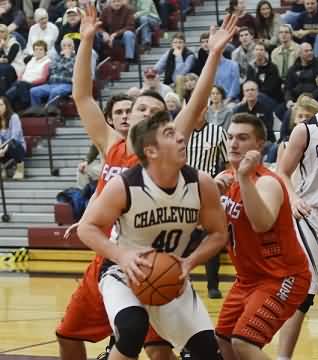
The on-ball defender closes-out and pressures the ball. The zone away from the ball resembles man-to-man "help-side" defense. Match-up zones have specific rotations and assignment rules. You can confuse the offense by changing your starting defensive set. The opponent may be unable to determine if you are in a man or zone defense.
"Junk" defenses are defenses designed for special situations, and you would never base your entire season's defensive scheme on junk defenses. But they can be helpful in certain situations. Defending a team with superior talent or a star player is always a challenge, and a junk defense may help. Some of these defenses include the "triangle defense", the "box-and-1", "diamond-and-1", "triangle-and-2", "inverted triangle-and-2", "1-3 and a chaser", and "3-1 and a chaser".
"Junk" defenses are defenses designed for special situations, and you would never base your entire season's defensive scheme on junk defenses. But they can be helpful in certain situations. Defending a team with superior talent or a star player is always a challenge, and a junk defense may help. Some of these defenses include the "triangle defense", the "box-and-1", "diamond-and-1", "triangle-and-2", "inverted triangle-and-2", "1-3 and a chaser", and "3-1 and a chaser".
Combination Zone Defenses
Match-up Zone Defense... important principles, rules, different sets.
1-3-1 Match-up Zone Defenses... a detailed 1-3-1 match-up zone from Coach Ken Sartini.
Junk Defenses... defending the star player, "box-and-1", "diamond-and-1", "triangle-and-2", "inverted triangle-and-2", "1-3 and a chaser", and "3-1 and a chaser".
4-1 Chameleon Defense... unusual 4-1 helf-court defense from Tyler Whitcomb.
Triangle Defense... a defense for defending a star perimeter player.
Match-up Zone Defense... important principles, rules, different sets.
1-3-1 Match-up Zone Defenses... a detailed 1-3-1 match-up zone from Coach Ken Sartini.
Junk Defenses... defending the star player, "box-and-1", "diamond-and-1", "triangle-and-2", "inverted triangle-and-2", "1-3 and a chaser", and "3-1 and a chaser".
4-1 Chameleon Defense... unusual 4-1 helf-court defense from Tyler Whitcomb.
Triangle Defense... a defense for defending a star perimeter player.
Half-Court Press Defense, Traps
Starting your defense at (or just beyond) the half-court line can confuse the offense, result in turnovers, steals and lay-ups in transition. It can disrupt the normal flow of the offense, making it difficult for them to get into their offense. Any press is a gamble that you might give up an easy basket, but half-court presses are less risky than full-court presses since your have all five defenders back in the half-court.Some teams half-court press the entire game, or until the offense shows they can beat it. Some teams use it intermittently, as a surprise tactic.
Additionally, within in the framework of our basic man-to-man pressure defense, we will at times "Red" (aggressively trap) the point guard O1 as he/she comes across half-court, or after our point defender forces O1 to one side, or on an on-ball screen, or whenever O1 is dribbling too much.
Half-Court Zone Press Defense
Viking 1-2-2 Half-Court Press... a very effective 1/2 to 3/4 court trapping press if you have three quick athletes (X1, X2 and X3) who play aggressively.
2-2-1 Half-Court Press... another half-court trapping press defense.
Viking 1-2-2 Half-Court Press... a very effective 1/2 to 3/4 court trapping press if you have three quick athletes (X1, X2 and X3) who play aggressively.
2-2-1 Half-Court Press... another half-court trapping press defense.
Defending Out-of-Bounds Plays
Choose between man-to-man or a zone defense in defending out-of-bounds plays. Some teams simply defend all baseline out-of-bounds plays with a 2-3 zone. This packs the paint area, and will help nullify screens and prevent inside lay-ups. However, there are inbounds plays designed to attack the 2-3 zone (see "Out-of-Bounds Plays vs the 2-3 Zone")Using man-to-man defense, we have several rules. First, "step under" and switch any inside screens. The screened defender steps under (back toward the baseline one step) to get inside position on the screener, in order to avoid getting pinned. In addition, deny the pass inside by having your inbounds defender play a "one-man zone" off the ball in the paint. The inbound defender drops off the inbound passer into the paint, looking to deny any pass inside and lay-up. Once the pass goes outside, he/she must go quickly with his man, the inbounder. See Defending Baseline Out-of-Bounds Plays.

